
Ionopsidium acaule
Ionopsidium acaule
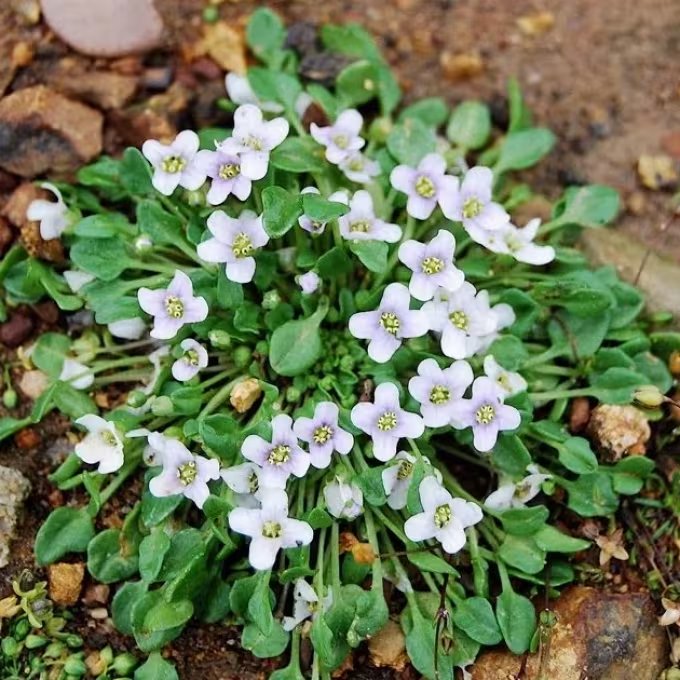
Description
Sowing dates
Ionopsidium acaule, commonly known as the Diamond Flower, is typically propagated by seeds sown directly into the garden in early spring once the soil is workable. It is an annual plant that thrives in cooler weather.
Since the seeds are extremely small, they should be scattered thinly over the surface of the soil. Lightly firm them into the ground without burying them deep, as they require light to germinate effectively.
Germination usually takes about 10 to 14 days under favourable conditions. Maintaining consistent soil moisture during this period is critical for successful emergence and establishment of the seedlings.
For a lush, carpet-like effect, seeds can be sown in patches or dense rows. As the plants mature, they form a low-growing mat that effectively covers bare ground in garden beds or rockeries.
Successive sowings can be performed every few weeks to ensure a continuous display of violet flowers throughout the cooler parts of the growing season.
Growing requirements
As a member of the Brassicaceae family, this plant prefers well-drained, fertile soil that remains cool. It originates from the Mediterranean region but adapts well to various temperate climates.
The Diamond Flower thrives in full sun to partial shade. In warmer regions, light afternoon shade is recommended to prevent the plant from wilting during the peak of the heat.
Watering should be consistent to keep the soil evenly moist but never waterlogged. Poor drainage often leads to root rot, which is a common issue for this small annual species.
The plant is relatively low-maintenance and generally does not require heavy fertilizing. However, incorporating a small amount of compost during soil preparation can enhance blooming.
Due to its small size and creeping habit, it is an ideal candidate for containers, hanging baskets, and pathways, where its delicate flowers can be appreciated up close.
Main diseases and pests
Crucifer flea beetles are the most significant pests for Ionopsidium acaule. They can quickly damage the young foliage, often leaving behind small, shot-like holes in the leaves.
Slugs and snails find the succulent stems and leaves very attractive, especially in damp, shaded environments. Protective barriers or baiting can be used to manage these pests.
Fungal diseases, such as downy mildew or root rot, may occur if the plants are kept in stagnant, humid conditions with poor air circulation. Proper spacing is essential to mitigate these risks.
It is important to avoid planting Ionopsidium acaule in areas that previously held other cruciferous crops if soil-borne pathogens are a concern, as they share similar susceptibilities.
Regular inspection of the foliage and removing any dead or decaying plant material helps maintain the health and vigor of the ground cover throughout the season.