
Idahoa scapigera
Idahoa scapigera
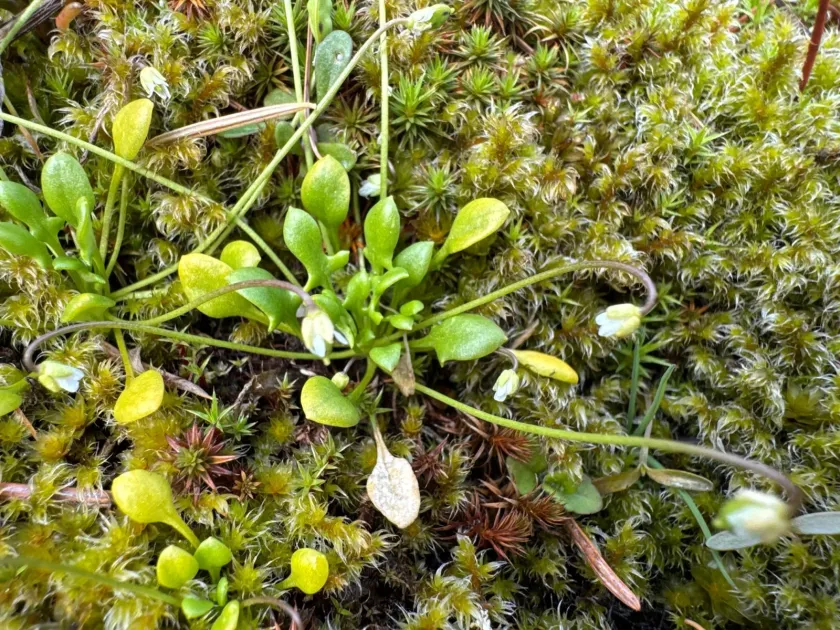
Description
Growing requirements
Idahoa scapigera is a small annual herbaceous plant belonging to the Brassicaceae (mustard) family. Commonly known as the scale-pod, it is characterized by its unique ability to complete its life cycle within a very short spring window, making it a pioneer species in its native environment.
The native range of this species is primarily in the Western United States, including Idaho, Oregon, and Washington. It typically colonizes areas with rocky soils, lithosols, and open shrub-steppe habitats where competition from taller, long-lived perennial grasses is minimal.
Environmental requirements for this plant are centered on early spring moisture and specific light levels. It thrives in soils that provide excellent drainage, as the species is intolerant of waterlogged conditions which can lead to rapid fungal decay of its delicate root system.
Botanically, Idahoa scapigera is distinct due to its depressed or flat-lying habit. It features a basal rosette of leaves and short scapes that bear white, four-petaled flowers. The fruits are orbicular, flat silicles that are highly adapted for seed dispersal in arid and semi-arid wind-swept landscapes.
In terms of agricultural or commercial use, Idahoa scapigera is not a crop plant. However, it serves as an important indicator species for researchers evaluating soil health and the impact of early-season drought on desert ecosystem biodiversity. Its seeds provide an important food source for local fauna during the early spring months.