
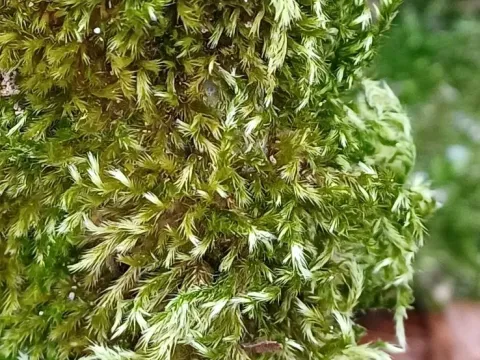
Homalothecium
Homalothecium
Homalothecium is a genus of pleurocarpous mosses belonging to the Brachytheciaceae family. These perennials are naturally distributed across the temperate regions of the Northern Hemisphere, where they occupy diverse niches ranging from tree bark to rocky surfaces, thriving in environments with consistent moisture.
What the section contains

Homalothecium
Botanically, the culture is distinguished by its dense, often glossy mats which can exhibit shades of yellow-green or deep gold. The stems are characterized by profuse branching, forming intricate carpets that serve as a crucial mechanism for moisture retention and protection against environmental stress during shorter dry spells.
Regarding habitat requirements, Homalothecium is highly selective of its substrate, preferring neutral to slightly alkaline surfaces. Since it lacks true roots, it relies entirely on its rhizoids to anchor itself to substrates, making it an excellent candidate for vertical surfaces where nutrient-rich dust and moisture are present.
The climate for optimal growth must remain humid and temperate. Homalothecium is exceptionally sensitive to air pollution, specifically sulfur dioxide, which makes it a widely recognized bioindicator of air quality. In agricultural and horticultural practices, maintaining a consistent microclimate is essential for its survival.
In terms of practical application, Homalothecium is increasingly utilized in modern landscape design for living walls and sustainable interior decor. Its ability to maintain vibrant textures without traditional soil requirements makes it an ideal component for eco-friendly architectural installations and specialty floristry.
The primary threat to the stability of Homalothecium populations is atmospheric pollution, which drastically inhibits its growth. As an ecologically sensitive species, it reacts negatively to high concentrations of toxins, leading to the rapid decay of the moss carpets within a very short timeframe.
Additional threats include the encroachment of invasive vascular plant species and competitive algae, which can dominate the substrate and limit light access. Poor ventilation in closed or indoor cultivation setups can also encourage the development of harmful fungal pathogens, threatening the integrity of the moss mats.