
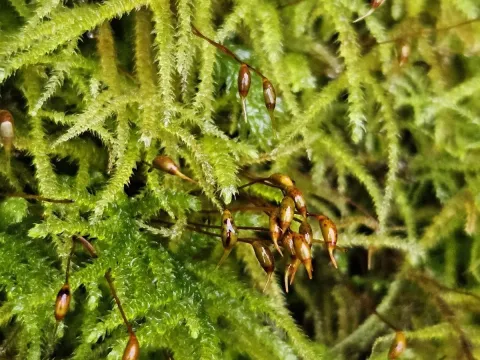
Eurhynchium
Eurhynchium
Eurhynchium is a genus of pleurocarpous mosses within the Brachytheciaceae family. While not a conventional agricultural crop, it serves as a vital ecological agent in forest ecosystems, contributing to moisture regulation and soil protection.
What the section contains


Eurhynchium
This genus is widely distributed across temperate regions of the Northern Hemisphere. It typically thrives in humid, shaded environments, colonizing forest floors, decaying logs, and rocky outcrops that provide consistent moisture throughout the year.
Botanically, Eurhynchium is characterized by its branching stems and dense, imbricate leaves, often featuring a distinct midrib. These plants form soft, carpet-like mats of vibrant green, which are highly effective at trapping and holding water within the ecosystem.
Cultivation requires strict adherence to environmental conditions: high atmospheric humidity, consistently damp substrate, and deep shade. The ideal soil for this moss is rich in organic matter, slightly acidic to neutral, and free from direct, scorching sunlight.
In landscaping, Eurhynchium is utilized for creating moss gardens and stabilizing damp, shaded slopes where conventional grass lawns would fail. It is prized for its ability to create a lush, uniform ground cover that requires minimal maintenance in appropriate climates.
The primary threat to Eurhynchium populations is the destruction of natural habitats, particularly through deforestation and the drainage of wetlands. Such disturbances cause rapid desiccation, leading to the immediate loss of vegetative colonies.
Being a bryophyte, Eurhynchium acts as a bio-accumulator, making it extremely sensitive to air and water pollution. Industrial pollutants and heavy metals can severely inhibit growth and lead to the degradation of large moss mats.
In managed landscapes, excessive humidity combined with poor ventilation can encourage the growth of pathogenic fungi or molds. These pathogens can quickly destroy the structural integrity of the moss mat, leading to localized rotting.
Competition from invasive weeds and higher vegetation can suppress Eurhynchium. When taller plants grow over it, they change the light levels and nutrient composition of the substrate, often forcing the moss to retreat from the area.
Preventative care involves maintaining stable moisture levels and avoiding the use of synthetic fertilizers or chemical pesticides. Since moss lacks a root system in the traditional sense, it cannot process chemicals safely and will decline rapidly if exposed to them.