
Homalothecium sericeum
Homalothecium sericeum
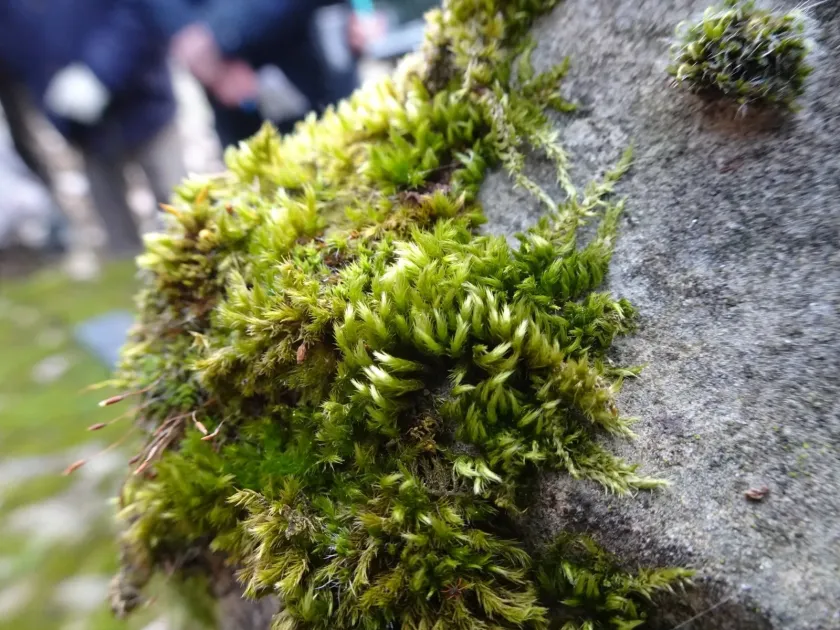
Description
Growing requirements
Homalothecium sericeum, commonly known as silky wall feather-moss, belongs to the Brachytheciaceae family. This bryophyte is primarily found growing on tree trunks, rock faces, and walls, thriving in diverse climatic zones across the Northern Hemisphere.
Botanically, it forms dense, shiny mats that appear golden or yellowish-green. The leaves are ovate-lanceolate and longitudinally plicate, which gives the colony its characteristic silky texture and reflective properties under sunlight.
The species exhibits remarkable poikilohydric properties, allowing it to survive extreme drought conditions by entering a dormant metabolic state. It revives quickly upon rehydration, making it highly resilient in fluctuating environments.
In terms of ecological requirements, it prefers sites with moderate humidity and indirect sunlight. It is frequently observed in parks and old-growth forests where it contributes to the overall moisture retention and biodiversity of the bark microhabitat.
While not a traditional agricultural crop, its presence is often encouraged in ecological landscaping and forest management to promote a stable micro-ecosystem, as it provides a refuge for various microscopic invertebrates.
Main diseases and pests
The most significant threat to Homalothecium sericeum is air pollution. As a sensitive bioindicator, it rapidly disappears from urban environments with high levels of sulfur dioxide and nitrogen oxides, which damage its delicate cellular structures.
Fungal diseases can pose a threat when the moss is kept in excessively damp conditions with poor air circulation, leading to necrotic spots and the eventual decay of the established moss mat.
Habitat destruction, specifically the removal of mature trees or the renovation of old masonry, causes immediate population decline. Because this moss grows slowly, it cannot recolonize disturbed areas rapidly.
Climate change, manifesting as prolonged heatwaves and altered rainfall patterns, disrupts the delicate balance required for the moss's growth, potentially reducing its ability to complete its reproductive cycle.
Competition from more aggressive, invasive lichen or bryophyte species can also result in the displacement of Homalothecium sericeum, especially when the local nutrient profile or pH levels of the substrate change due to human activity.