
Common Feather-moss
Eurhynchium praelongum
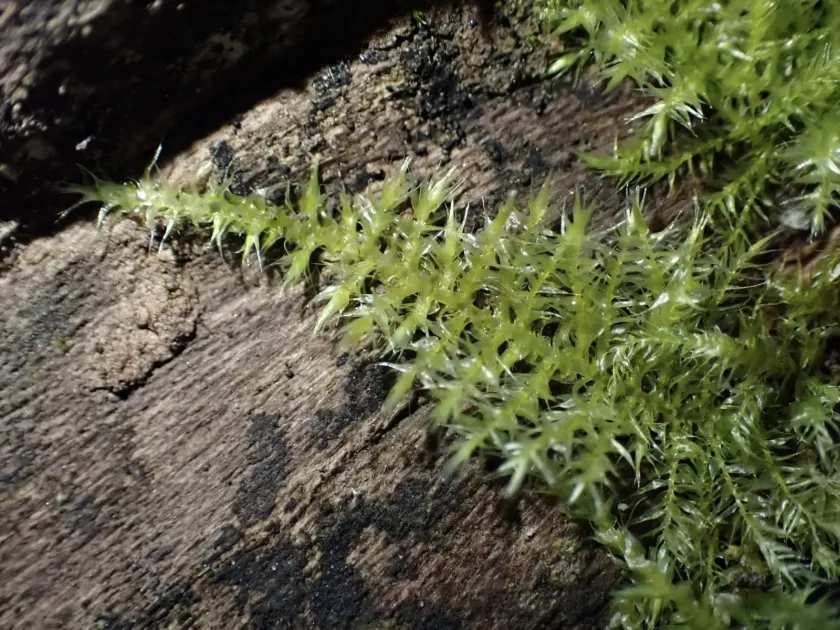
Description
Growing requirements
The Common Feather-moss, taxonomically classified as Kindbergia praelonga, belongs to the Brachytheciaceae family. It is a pleurocarpous moss widely found in woodland environments across the Northern Hemisphere.
Botanically, it forms loose or dense mats of bright green, pinnately branched shoots. Its leaves are ovate-triangular with a distinct nerve that extends significantly towards the apex, which is a key identification feature for field biologists.
The species prefers moist, shaded habitats and is commonly found on nutrient-rich soil, rotting logs, or the base of tree trunks. It is highly adapted to high-humidity environments where it helps maintain soil moisture levels.
In terms of ecological requirements, this moss thrives in areas with stable forest canopy cover. It serves as an indicator of a well-balanced forest ecosystem, as it is sensitive to major fluctuations in the microclimate and soil moisture availability.
While not a traditional agricultural crop, its value lies in its role in forest succession and soil protection. It creates a micro-habitat for various microorganisms and small invertebrates that contribute to the decomposition of organic matter.
Main diseases and pests
The primary threats to Eurhynchium praelongum populations are habitat destruction and deforestation. The removal of canopy trees results in increased exposure to direct sunlight, causing rapid desiccation of the moss mats.
Atmospheric pollution, particularly sulphur dioxide and nitrogen deposition, can be lethal to the species. Because mosses lack true roots and derive water directly from the air and precipitation, they are extremely vulnerable to toxins.
Mechanical disturbances from trampling, off-road vehicle use, or heavy grazing in woodland areas lead to the physical fragmentation of the moss. Due to its slow growth rate, the recovery of damaged patches can take several growing seasons.
Climate change-induced droughts pose a significant risk, as this moss species relies on steady moisture for both vegetative growth and spore reproduction. Reduced rainfall patterns directly limit the dispersal and colonization of new substrates.
Invasive plant species can outcompete the Common Feather-moss for space and nutrients in disturbed habitats. A change in forest floor composition often marks the decline of moss cover, which in turn affects the local moisture retention capacity.