
Upland comfrey
Symphytum x uplandicum Nyman
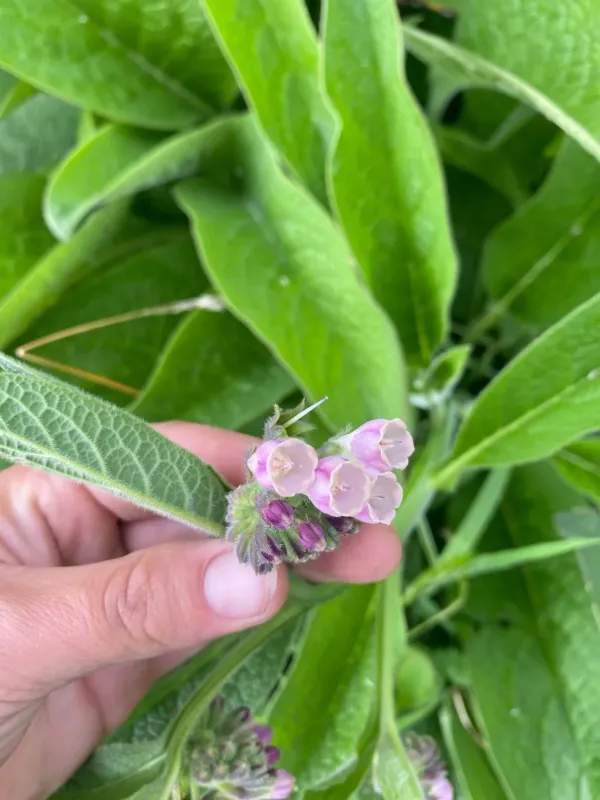
Description
Sowing dates
Upland comfrey (Symphytum x uplandicum) is a perennial hybrid belonging to the Boraginaceae family. It is a cross between common comfrey and rough comfrey, renowned for its vigorous growth and deep, extensive root system.
As a sterile hybrid, it is propagated primarily through vegetative means, such as root cuttings or division of established clumps. Planting is best performed in early spring or autumn to ensure the roots establish well before extreme temperatures arrive.
When establishing a plantation, cuttings should be planted in furrows at a depth of approximately 10 to 15 centimeters. Spacing should be maintained at 60–80 centimeters between rows to allow sufficient airflow and room for the massive foliage development.
The plant demonstrates excellent persistence, with well-managed plantations remaining productive for over 15 years. Establishing a robust root system early on is key to the plant's long-term dominance in the field.
Care must be taken to plant in well-drained soil, as while the plant is resilient, permanent waterlogging during dormancy can lead to root crown rot and reduced stand longevity.
Growing requirements
Upland comfrey is highly adaptable but thrives best in deep, fertile, loamy soils that hold moisture well. Its deep taproots allow it to access water and minerals from soil layers unreachable by common annual crops.
The plant is tolerant of varying pH levels and can grow in both full sun and partial shade. Its ability to accumulate potassium, calcium, and nitrogen makes it a valuable plant for soil restoration and organic fertilizing programs.
Cold hardiness is a major advantage of Upland comfrey; it survives harsh winters with ease, as the growing points are protected well below the soil surface, ensuring rapid regrowth once spring temperatures return.
While tolerant of low-fertility soils, the plant shows a significant increase in biomass production when provided with adequate organic matter and occasional moisture during peak summer growth.
Maintaining the plantation involves weeding during the establishment phase, as young plants may struggle against aggressive grasses until they fully develop their canopy and shade out competitors.
Yield
The biomass yield of Upland comfrey is exceptional, often reaching 60–100 metric tons per hectare under intensive management. This makes it a preferred choice for producers seeking high-volume organic fodder.
Because the plant regrows rapidly after each cutting, it typically yields 3 to 4 harvests per season. This continuous availability makes it an ideal supplement for livestock diets, especially in organic livestock operations.
The foliage is highly nutritious, packed with essential minerals and protein. It is widely used as a "green manure" or as a liquid fertilizer, which acts as a powerful stimulant for other garden and field crops.
Productivity peaks from the third year onwards once the root system has fully matured. At this stage, the plant is capable of reclaiming and recycling nutrients from the subsoil with high efficiency.
Optimizing yield requires strategic harvesting and occasional nutrient replenishment, particularly potash, which supports the plant's intense metabolic rate during the growing season.
Main diseases and pests
Upland comfrey is generally resistant to most common pests and diseases due to the presence of alkaloids and its rough, hairy leaf texture, which deters many insects.
Under conditions of high humidity and poor air circulation, powdery mildew may develop on the foliage. Proper spacing and selecting well-drained sites are the most effective preventive measures.
Slugs and snails can be an issue for young, tender leaves in the early spring, particularly in wet gardens. Physical barriers or organic deterrents are usually sufficient to manage these pests.
The plant is rarely bothered by soil-borne pests, as its chemical composition provides a natural defense. It is considered one of the most reliable and low-maintenance crops in a farming rotation.
The primary concern is the plant's tendency to spread if left unmanaged, so it is best to establish it in designated, permanent areas where its vigor can be easily contained.
Harvesting
Harvesting is best conducted during the flowering stage, which is when the nutrient content of the leaves is at its highest. Cutting should take place just as the first flowers begin to open.
Plants should be mowed to a height of 5–10 centimeters above the ground. This promotes rapid regrowth from the base and ensures that the plant does not lose its regenerative vigor throughout the season.
Harvested material is highly perishable and should be utilized shortly after cutting. If drying is required, it must be done in the shade to prevent the rapid degradation of vitamins and nutrients by sunlight.
Ensuring the final harvest of the season is done early enough before the first frost allows the plant to relocate nutrients from the leaves back into the root system, ensuring healthy winter survival.
For large-scale operations, mechanical harvesting is possible, provided the equipment is capable of handling the high moisture content of the succulent leaves and stems effectively.