
Rough comfrey
Symphytum asperum Lepech.
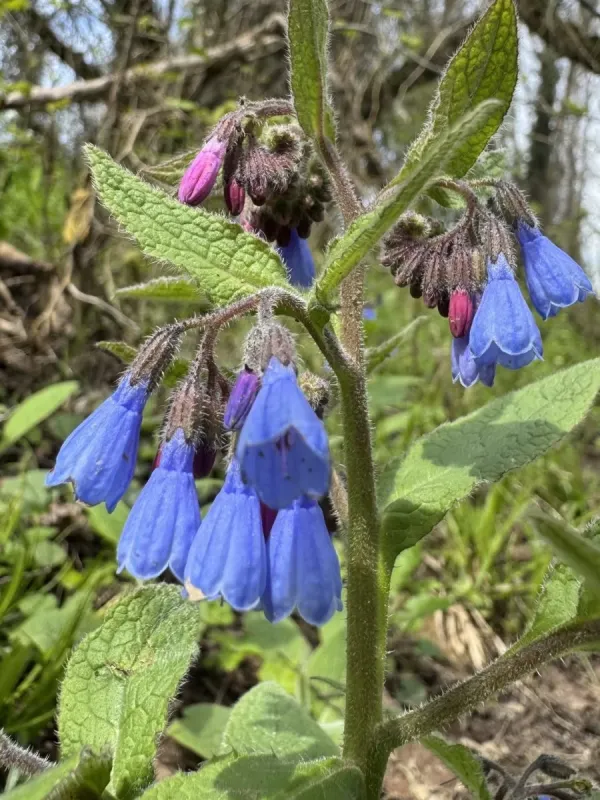
Description
Sowing dates
Rough comfrey (Symphytum asperum), a member of the Boraginaceae family, is a highly valued perennial crop. Sowing can be performed either in late autumn or early spring once soil temperatures reach 5-6 degrees Celsius.
Due to the relatively low germination rate of seeds, commercial producers often prefer vegetative propagation by dividing established clumps or planting root segments.
When establishing a plantation, row spacing should be maintained at 60 to 70 centimeters to allow the root system enough space to establish and sustain high productivity.
If sowing seeds, the depth should not exceed 2-3 centimeters to ensure that the delicate seedlings can reach the surface without depleting their internal energy reserves.
Post-planting rolling is recommended to ensure consistent seed-to-soil contact, which significantly improves the survival rate and uniformity of the emerging crop.
Growing requirements
This crop thrives in moist, well-drained soils; it is sensitive to waterlogging, as stagnant water can lead to root rot and severely diminish the overall stand health.
The ideal soil profile for rough comfrey is a fertile, humus-rich loam with a neutral to slightly acidic pH, supporting its high nutritional demand for rapid growth.
Rough comfrey is noted for its exceptional winter hardiness, allowing it to survive harsh climatic conditions and regenerate vigorously early in the spring season.
While it tolerates light shade, it prefers full sun exposure for optimal biomass production, making open field placement the best strategy for industrial cultivation.
The plant is highly responsive to organic fertilization; adding compost or manure before planting provides the necessary nutrients for the crop to reach its full potential.
Yield
The primary agricultural use of rough comfrey is as a source of high-protein green fodder, which is an excellent nutritional supplement for various livestock, including cattle.
With proper moisture management and periodic fertilization, the crop can yield 3-4 harvests per season and remain productive on the same site for over a decade.
Average biomass yields range from 400 to 600 centners per hectare, positioning this plant as one of the most productive perennial options for temperate-climate fodder production.
Beyond its feed value, it is a superior green manure crop, as its deep taproots mine minerals from the subsoil, bringing them to the surface for other crops to utilize.
The leaves are rich in potassium and nitrogen, making them a premium additive for composting operations to accelerate the breakdown of organic matter and improve quality.
Main diseases and pests
Rough comfrey is generally resilient, but in humid conditions, it can become susceptible to powdery mildew, which may lower the nutritional value of the harvested biomass.
Common pests include certain species of weevils and slugs, which can cause significant foliage damage during the active growth phase in spring and early summer.
To mitigate fungal risks, it is essential to maintain proper airflow within the planting rows by avoiding overcrowding, which helps keep the foliage dry and healthy.
Biological pest control methods, such as encouraging natural predators, are preferred in sustainable farming systems to keep pest levels below economic thresholds.
If chemical pesticides are used, strictly adhering to pre-harvest intervals is mandatory to ensure the fodder remains safe and free from toxic residues for animals.
Harvesting
The critical harvest window is before full flowering; harvesting at this stage ensures the foliage contains the highest concentration of protein and essential vitamins.
Delaying harvest until the plant enters the reproductive stage leads to woody stems and a decline in nutritional quality, significantly reducing livestock intake.
Harvested material should be processed or ensiled quickly because the high succulence of the leaves makes them prone to heating if left in large piles for too long.
When producing hay, longer drying times are required compared to traditional grass hays due to the high water content within the thick, succulent broad leaves.
A final late-autumn harvest should be avoided to ensure that the plant can store sufficient starch reserves in its roots, which is vital for successful overwintering.