
Aglaonema commutatum
Aglaonema commutatum Schott x Aglaonema crispum (Pitcher & R. F. Manda) Nicolson
Description
Growing requirements
Aglaonema commutatum is a species of flowering plant in the Araceae family, native to the tropical forests of the Philippines and parts of Southeast Asia. It is widely cultivated for its ornamental foliage and high adaptability to indoor environments.
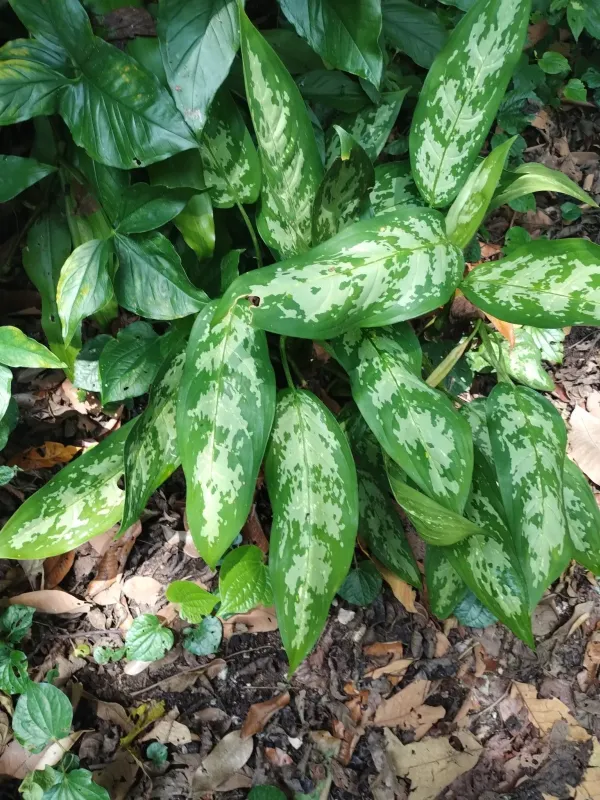
The plant features glossy, lance-shaped leaves with distinct silver-grey patterns. It typically grows as an evergreen perennial, characterized by short stems and leaves that arise directly from the base or from succulent nodes.
Regarding environmental conditions, it thrives in temperatures between 20°C and 25°C. It is highly sensitive to cold drafts; temperatures falling below 15°C can cause significant metabolic stress and leaf drop.
The soil must be well-draining, slightly acidic, and rich in organic matter. A professional substrate usually contains peat moss, perlite, and pine bark to ensure aeration and moisture retention without risking root suffocation.
Proper irrigation management is vital. The substrate should be allowed to dry slightly at the top level between waterings. Regular fertilization with a balanced liquid fertilizer during the growing season is recommended to maintain foliage vibrancy.
Main diseases and pests
The most common pests affecting this species are spider mites, mealybugs, and scale insects. These pests thrive in dry indoor conditions and can severely damage the plant by feeding on its sap, leading to stunted development.
Root rot, typically caused by Pythium or Phytophthora, is the primary threat to plant health. It is usually a result of overwatering and insufficient drainage, which creates an anaerobic environment favorable for these pathogens.
Leaf spot disease, caused by various fungal and bacterial agents, often appears as dark, irregular lesions on the foliage. High humidity combined with poor air circulation is the main environmental factor promoting these infections.
Integrated pest management (IPM) should be applied to manage outbreaks effectively. This includes physical removal of pests, regular inspection, and the use of insecticidal oils if infestation levels exceed economic thresholds.
Maintaining proper sanitation in greenhouses, such as sterilizing containers and keeping tools clean, is essential. Ensuring optimal spacing between plants helps prevent the quick spread of fungal spores among the stock.