
Spotted Evergreen
Aglaonema costatum N. E. Br. forma costatum
Description
Growing requirements
Aglaonema costatum, commonly known as the spotted evergreen, is a member of the Araceae family. This ornamental crop is native to the rainforests of Southeast Asia, specifically regions like Malaysia and Thailand, where it thrives in shaded, humid conditions.
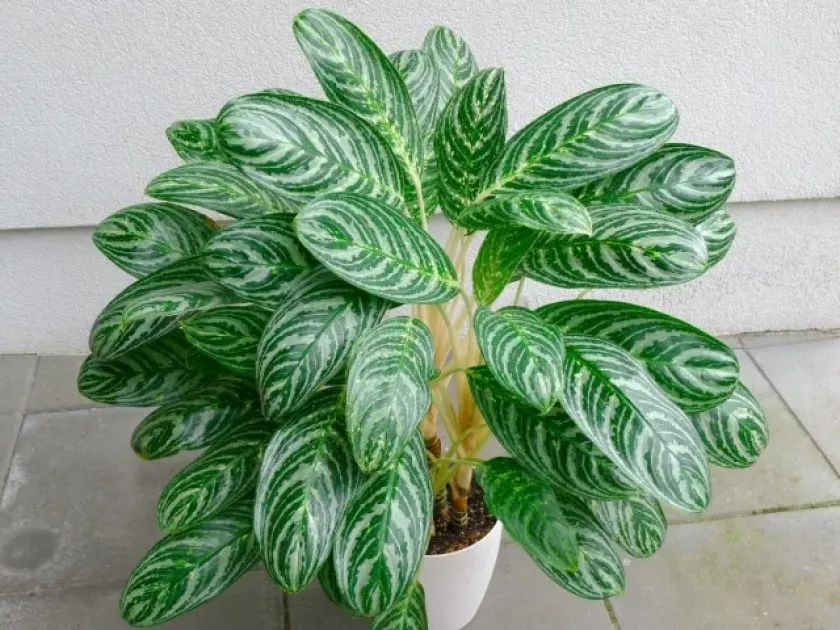
Botanically, this species is noted for its ovate, cordate leaves featuring a deep green base adorned with prominent white spots and a distinct ivory-white midrib. It is a slow-growing herbaceous perennial that maintains a compact habit throughout its lifespan.
Agronomic requirements for this culture include high ambient humidity and temperatures between 20°C and 26°C. It is strictly sensitive to thermal stress, meaning that cold drafts or temperature fluctuations will result in rapid leaf yellowing and foliage drop.
Soil management for Aglaonema requires a well-draining, porous medium rich in organic matter. A mixture of peat, pine bark, and perlite is typically used to ensure adequate aeration around the root zone, preventing oxygen deprivation in the soil profile.
The primary use of this plant is in the commercial floriculture industry as a high-value foliage houseplant. It is highly valued for its tolerance to low-light environments, making it a staple in indoor landscaping and interior office environments.
Main diseases and pests
Major pests affecting this crop include spider mites, mealybugs, and scale insects. Management strategies rely on regular monitoring of the underside of the leaves and the application of integrated pest management (IPM) techniques to minimize chemical interventions.
Pathological risks are mostly associated with fungal infections like Phytophthora or Pythium, which cause root and stem rot. These diseases are usually triggered by over-irrigation or the use of poorly drained, compacted soils that do not allow for gas exchange.