
Aglaonema commutatum
Aglaonema commutatum Schott x Aglaonema philippinense Engl. var. stenophyllum (Merr.) R. N. Jervis
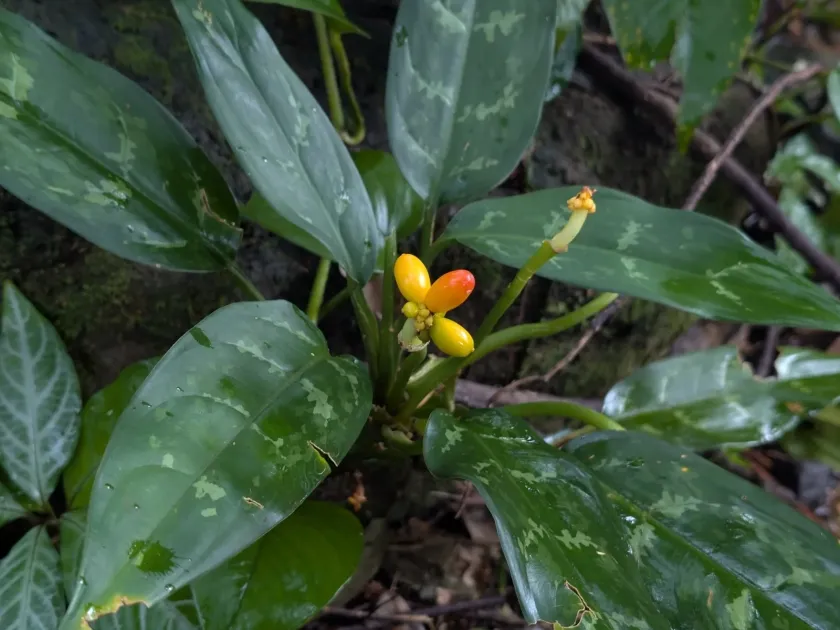
Description
Growing requirements
Aglaonema commutatum is a perennial evergreen herbaceous plant belonging to the Araceae family. This species is native to the tropical rainforests of the Philippines and parts of Southeast Asia, where it thrives in shaded, humid environments.
The plant is characterized by its upright stems and lanceolate, leathery leaves which are typically variegated with silver or cream-colored patterns. It is a slow-growing species, making it highly valued in the nursery and ornamental plant industry.
Optimal growth requires consistent temperatures ranging between 20°C and 25°C. The plant should be protected from direct sunlight, which can scorch the leaves and fade their unique variegation patterns, preferring filtered, indirect light instead.
Cultivation necessitates a loose, well-draining, and slightly acidic potting substrate. High humidity, preferably above 60%, is essential for the healthy development of the plant and for preventing the margins of the leaves from drying out.
Watering should be balanced, allowing the substrate to partially dry out between sessions to prevent root asphyxiation. During the active growth phase, the application of balanced liquid fertilizers every two weeks promotes vigorous leaf production.
Main diseases and pests
Spider mites, mealybugs, and scale insects are the primary pests affecting Aglaonema commutatum. These pests are particularly problematic in environments with low humidity and poor ventilation, requiring regular monitoring and integrated pest management.
Root rot, typically caused by Pythium or Phytophthora species, is the most critical threat when soil drainage is insufficient. Keeping the soil consistently waterlogged creates an anaerobic environment that fosters fungal growth and root necrosis.
Leaf spot diseases often occur due to bacterial infections, especially if leaves remain wet for extended periods. Pruning affected leaves and maintaining proper airflow around the plant are effective strategies to prevent the spread of pathogens.
Viral infections can appear as mosaics, rings, or leaf deformations. Since there is no cure for viral diseases in ornamental plants, strict sanitation and the immediate removal of infected specimens are required to protect the rest of the crop.
To ensure high quality, growers should perform periodic sanitation checks, removing dead organic matter to reduce the risk of secondary infections and pest colonization in the production area.