
Aglaonema commutatum
Aglaonema commutatum Schott x Aglaonema rotundum N.E.Br.
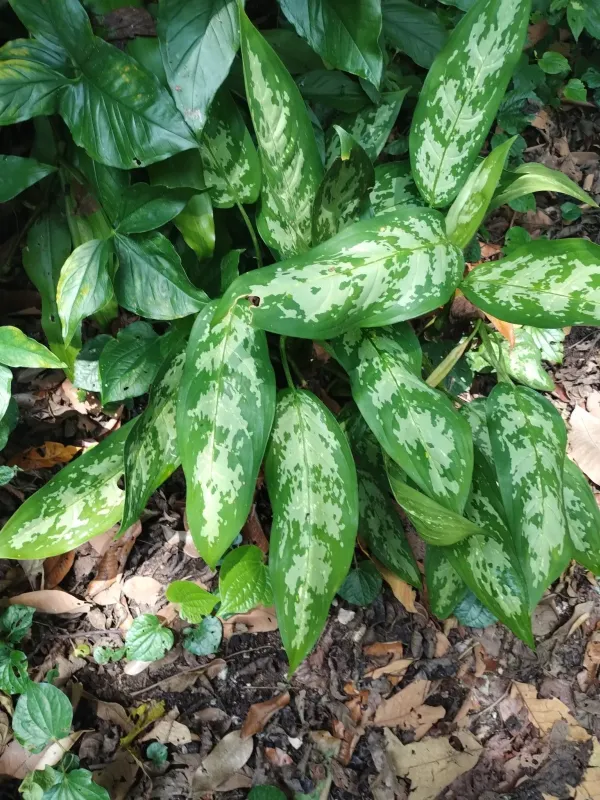
Description
Growing requirements
Aglaonema commutatum (a hybrid derived from Aglaonema commutatum and Aglaonema rotundum) is a member of the Araceae family. This ornamental crop is native to the tropical rainforests of Southeast Asia, thriving in the understory of dense forests.
Botanically, it is recognized by its slow-growing stems and thick, lance-shaped leaves featuring variegated patterns of silver and green. The plant typically reaches a mature height of 1.5 to 2 feet, maintaining a bushy, upright habit throughout its life cycle.
For optimal growth, the crop requires bright, indirect light to maintain the vibrancy of its leaf variegation. Direct sunlight exposure should be avoided as it leads to foliar scorching, while excessively low light levels may significantly reduce growth rates.
Climatic requirements focus on warmth and humidity; the plant thrives at temperatures between 68°F and 77°F (20–25°C). It is sensitive to cold drafts and temperatures falling below 60°F (15°C), which can trigger stress and susceptibility to pathogens.
The soil must be well-drained and slightly acidic, with a pH range of 5.5 to 6.5. A mix consisting of peat moss, perlite, and pine bark is recommended for commercial and indoor cultivation to ensure adequate aeration and moisture retention.
Main diseases and pests
Common pests affecting Aglaonema commutatum include mealybugs, spider mites, and aphids. Integrated pest management strategies, such as physical removal and the use of neem oil or systemic insecticides, are highly effective against these populations.
Root rot, caused by overwatering and poor drainage, remains the most significant threat to the crop. Excess moisture in the root zone leads to oxygen deprivation and facilitates the rapid growth of oomycetes and pathogenic fungi.
Fungal leaf spot diseases may appear if foliage remains wet for extended periods in environments with poor air circulation. It is essential to water the plant at the soil level rather than over the leaves to minimize the risk of infection.
Nutrient deficiencies, particularly nitrogen and magnesium, may manifest as leaf yellowing or chlorosis. Regular application of balanced water-soluble fertilizers during the growing season is necessary to maintain foliage health and vigor.
As part of the Araceae family, this plant contains calcium oxalate crystals, which are toxic if ingested and can cause severe skin irritation. Protective equipment should be worn during pruning or repotting activities to ensure safety.