
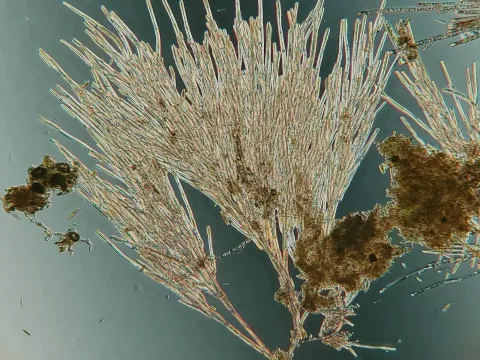
Audouinella
Audouinella
Audouinella is a genus of red algae belonging to the family Acrochaetiaceae. It is not an agricultural crop but rather a widespread group of filamentous algae that can colonize various submerged substrates in both marine and freshwater environments.
What the section contains

Audouinella
The distribution of this genus is global, as it is highly adaptable to various ecological niches. These algae are known for their filamentous structure, which allows them to attach to rocks, driftwood, and the leaves of aquatic plants using specialized rhizoids.
Environmental requirements for Audouinella include a supply of dissolved organic matter and minerals, particularly phosphorus and nitrogen. Unlike higher plants, these algae thrive in conditions that are often considered limiting for more complex photosynthetic organisms.
In terms of management, Audouinella is often addressed in the context of controlled aquatic environments, such as aquarium systems where it is colloquially known as "black brush algae". Its growth is heavily influenced by water movement and the availability of carbon dioxide.
Agrotechnical approaches regarding this organism involve strict control of water chemistry. Limiting nutrient runoff into water bodies is essential to prevent the excessive proliferation of these algae, which can otherwise outcompete beneficial vegetation.
The primary threat posed by Audouinella is the smothering of aquatic vegetation. By forming dense, dark mats, the algae interfere with the light absorption of host plants, leading to severe chlorosis and the eventual decline of submerged greenery.
Control strategies emphasize integrated management techniques. This includes manual removal, which is effective for small-scale infestations, and the optimization of water quality to ensure the environment is less favorable for algal spores.
Chemical control involving algaecides requires careful application. Because these algae are closely related to some beneficial aquatic organisms, the risk of collateral damage to non-target plants must be mitigated through precise dosage management.
Biological controls are highly recommended, involving the introduction of herbivorous species that naturally graze on red algae. This creates a sustainable balance that keeps the populations of Audouinella under check without chemical intervention.
Prevention remains the most effective strategy. Monitoring the nitrogen-to-phosphorus ratio and ensuring proper circulation in water systems are critical steps for maintaining the health of the aquatic environment and preventing outbreaks of Audouinella.