
Aconitum kitadakense
Aconitum kitadakense
Description
Growing requirements
Aconitum kitadakense is a perennial herbaceous plant belonging to the Ranunculaceae family. Native to the mountainous regions of Japan, this species is well-adapted to cooler climates and high-altitude environments, making it a unique addition to specialized gardens.
The plant thrives in well-drained, fertile, and slightly acidic to neutral soils. It requires moisture-retentive conditions, yet it is highly intolerant of waterlogged soil, which can quickly lead to root decay. Site selection should favor areas with partial shade, protecting the foliage from intense midday heat.
Cultural success depends heavily on temperature management; the plant prefers a cool root environment. Applying organic mulch is a vital practice that helps maintain soil moisture while protecting the roots from excessive summer heat. In proper conditions, it forms dense, vigorous clumps.
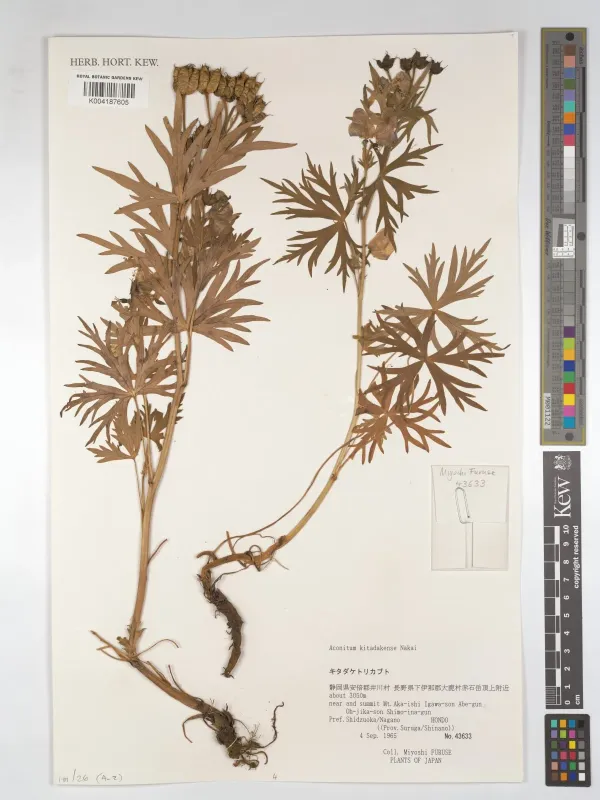
Botanically, Aconitum kitadakense is recognized by its palmately divided leaves and striking, deep blue-purple inflorescences arranged in terminal racemes. Its structural elegance makes it a highly desirable candidate for ornamental landscapes, though it remains a niche crop.
Regarding its utility, the plant is primarily cultivated for ornamental purposes and potential pharmacological research due to its alkaloid content. Growers must exercise extreme caution, as all parts of the plant are highly toxic, necessitating the use of gloves and protective gear during all handling procedures.
Main diseases and pests
The main pathological threats include fungal infections such as powdery mildew and various root rot pathogens. Proper ventilation and avoiding overhead irrigation are key strategies to mitigate the spread of these diseases, especially in humid or stagnant air conditions.
Insects like aphids and nematodes can cause significant damage to the plant if left unchecked. A preventative integrated pest management program, including periodic inspection of the foliage and the application of appropriate systemic insecticides, is recommended to ensure plant health.