
Audouinella hermannii
Audouinella hermannii
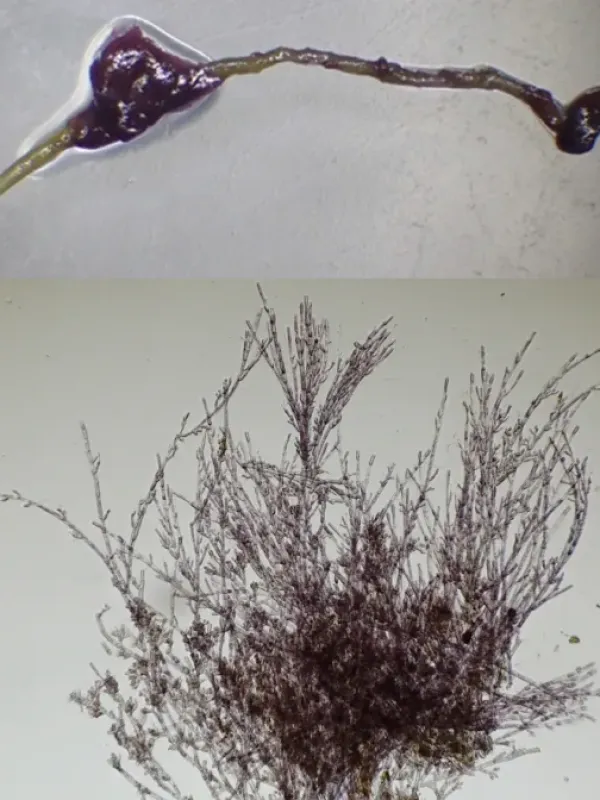
Description
Growing requirements
Audouinella hermannii is a species of red algae belonging to the Acrochaetiaceae family. It is not an agricultural crop in the traditional sense; rather, it is a significant aquatic macrophyte found in various freshwater environments.
Botanically, it forms small, tufted, branched filaments that attach to solid substrates such as rocks and wood in streams. The plant is noted for its distinctive reddish-brown coloration, which can vary based on the light intensity of its environment.
The growth requirements for this alga include clean, well-oxygenated flowing water. It is highly sensitive to water quality, making it a reliable bioindicator for researchers studying the health of streams and river systems used in irrigation.
Its natural range is global, spanning various temperate and cool climate regions. It thrives in environments where there is stable current and a low level of organic pollution, which would otherwise encourage the growth of invasive species.
While not cultivated for commercial harvest, it serves a critical role in aquatic ecosystems. It provides micro-habitats for diverse aquatic invertebrates, contributing to the overall biodiversity of the freshwater habitats it occupies.
Main diseases and pests
The primary threats to Audouinella hermannii populations are related to the eutrophication of water bodies. Excessive nutrient runoff, especially phosphates and nitrates, alters the chemical balance of streams, threatening the species.
In managed agricultural water systems, such as irrigation channels, excessive growth of this alga can be viewed as a nuisance. It can reduce flow rates, necessitating mechanical removal to maintain infrastructure functionality.
Control methods involve environmental management rather than chemical interventions. Adjusting light exposure or limiting nutrient influx is generally sufficient to prevent overgrowth in controlled water systems.
There are no specific pests affecting this species in the traditional agricultural sense, but it is susceptible to pathogenic fungi and other parasitic aquatic organisms that can impair its vegetative growth.
Effective management of aquatic ecosystems requires a balanced approach to ensure that the growth of algae like Audouinella hermannii remains within limits that support biodiversity without impeding essential water infrastructure.