
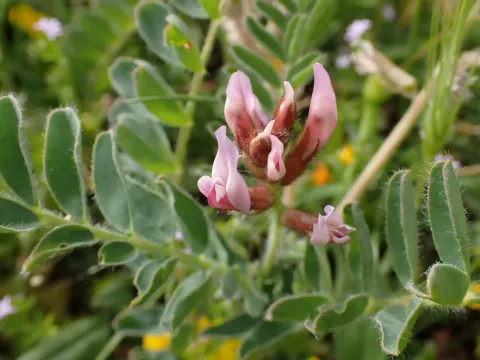
Astragalus verrucosus
Astragalus verrucosus
Astragalus verrucosus is a perennial herb belonging to the Fabaceae family. As with many legumes, the seeds possess a hard seed coat, which necessitates mechanical or chemical scarification prior to sowing to ensure uniform germination rates across the field.
What the section contains
Astragalus verrucosus
The optimal sowing period is early spring, ensuring the soil has sufficient moisture reserves for initial seedling emergence. Proper seedbed preparation, resulting in fine soil aggregates, is critical for establishing contact between the soil particles and the seeds.
Sowing depth should be kept between 2 and 3 centimeters. Given the slow growth rate during the establishment phase, row spacing of 30 to 45 centimeters is recommended to reduce competition for light and nutrients, allowing the plants to develop a strong taproot system.
During the first year, the crop focuses energy on underground development rather than shoot growth. Therefore, effective weed management is essential during the early stages, as young seedlings are poor competitors against invasive weeds and vigorous grasses.
Using high-quality, certified seeds with high germination energy is a fundamental prerequisite for success. Careful planning of seed density ensures that the stand density is optimal for the specific intended purpose, whether for forage or seed production.
This crop is a xerophyte, well-adapted to arid environments and high-temperature stress. It prefers open, sunny locations, as shading negatively impacts the plant's physiological processes, including flower bud initiation and seed formation.
In terms of soil, it thrives in well-drained, light-textured soils such as sandy loams. The plant is particularly intolerant of waterlogging and high water tables, which can lead to root system dysfunction and overall plant decline within a short period.
Astragalus verrucosus exhibits good adaptability to alkaline and even moderately saline soils. As a leguminous crop, it forms symbiotic relationships with nitrogen-fixing bacteria, which helps in improving soil fertility in the rhizosphere and reduces dependence on synthetic nitrogen.
The plant demonstrates fair cold tolerance, though its growth cycle is heavily dependent on regional climatic patterns and the availability of sufficient thermal units during the active growing season. Spring regrowth typically begins when soil temperatures reach 5–8 degrees Celsius.
To maximize biomass or seed yield, farmers should ensure the fields are free from perennial weeds. Providing phosphorus and potassium fertilizers during the initial phases of cultivation can significantly bolster root development and increase the crop's overall stress resistance.
The primary phytopathological threats include various fungal root rot pathogens, which are often exacerbated by poor drainage and excessive soil moisture. These diseases can lead to thinning stands and significantly reduced crop vitality.
Leaf spot diseases are common in humid conditions and can damage the photosynthetic surface of the plants. Effective disease management involves maintaining proper crop rotation and removing any infection reservoirs to prevent the spread of spores during favorable weather.
In terms of pests, the most significant damage is often caused by insects that target the reproductive organs. Beetles and weevils can consume flower buds and developing pods, which results in severe yield loss for seed producers.
Soil-dwelling larvae, such as white grubs or wireworms, represent another threat by feeding on the root system. Damage caused by these pests can stunt the plant growth and provide entry points for soil-borne pathogens, leading to secondary infections.
Integrated pest management strategies are recommended, focusing on preventative measures such as crop rotation, monitoring of insect populations, and the use of biological control agents to minimize the need for broad-spectrum chemical insecticides.