
Acacia conniana
Acacia conniana
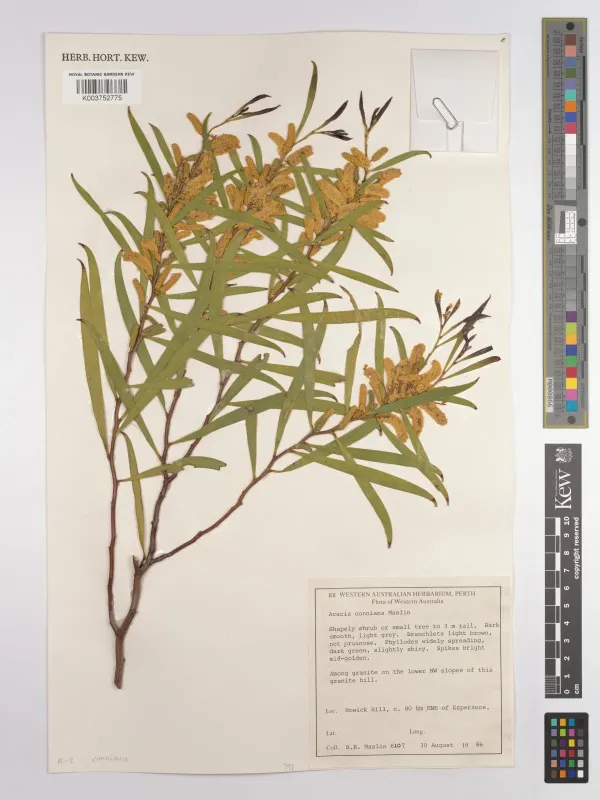
Description
Growing requirements
Acacia conniana is a distinctive species belonging to the Fabaceae family, native to the arid and semi-arid regions of Western Australia. As a perennial woody plant, it is recognized for its structural resilience and ability to thrive in challenging environmental conditions.
The cultivation of this species requires well-draining soils, particularly sandy or loamy textures that prevent waterlogging. Like many members of the genus, it thrives in nutrient-poor soils and has the capacity to improve soil health through its nitrogen-fixing capabilities.
Exposure to full sunlight is critical for the development of Acacia conniana. It demonstrates remarkable tolerance to intense heat and prolonged periods without rainfall, making it a suitable candidate for xeriscaping and sustainable land management in hot climates.
Temperature requirements are centered around warm to hot conditions. While established plants are hardy, young saplings need protection from frost during the winter months to ensure successful survival and early growth development.
Practical applications for this crop include ecological restoration projects, land stabilization, and the creation of windbreaks. Its decorative properties also make it an interesting choice for drought-tolerant landscaping in public and private gardens where water conservation is prioritized.