
Arizona walnut
Juglans major (Torr.) A. Heller
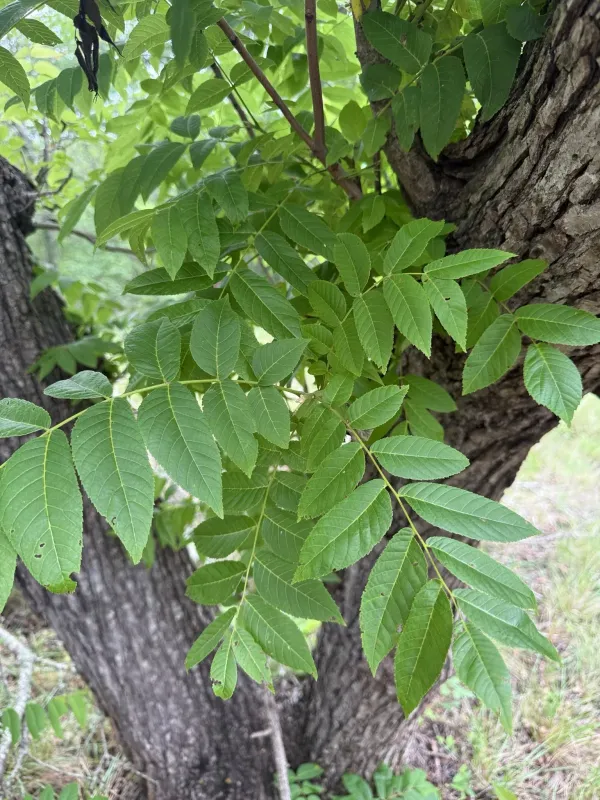
Description
Sowing dates
The Arizona walnut is primarily propagated through seeds, which require specific pre-sowing treatments to ensure successful germination in nurseries or plantations.
Seeds should undergo cold stratification for approximately 90 to 120 days at temperatures between 1°C and 5°C, usually buried in moist sand or vermiculite.
Sowing should take place in late autumn or early spring, placing seeds 5–8 centimeters deep in well-prepared, loose, and fertile soil to encourage root development.
Adequate moisture must be maintained throughout the germination period, although care must be taken to avoid waterlogging that can cause the seeds to rot before sprouting.
Young seedlings grow moderately in the first few years as they focus on establishing a deep taproot system, which is essential for the plant's future drought tolerance.
Growing requirements
This species belongs to the Juglandaceae family and is native to the riparian habitats and canyons of the southwestern United States and northern Mexico.
It thrives in regions with warm, semi-arid climates, exhibiting high tolerance to heat and dry conditions once the tree is fully established in the landscape.
The tree prefers deep, alkaline to neutral soils with excellent drainage, as it is highly susceptible to root damage when grown in heavy, poorly drained clay soils.
While the tree can handle periods of low precipitation, supplemental irrigation during the initial stages of planting significantly improves its growth rates and survival.
Arizona walnut is often planted in arid areas for erosion control, windbreaks, or as a rootstock for other walnut species due to its natural hardiness and adaptability.
Yield
The fruit of the Arizona walnut is smaller than that of the commercial English walnut and features a very thick, hard shell that makes kernel extraction difficult.
Despite the difficulty in processing, the kernels have a rich, nutty flavor that is valued in some local markets, although large-scale commercial harvesting is rare.
The tree’s primary economic importance lies in its timber, which is highly sought after for fine furniture making due to its beautiful grain pattern and deep color.
Trees typically reach reproductive maturity within 7–10 years, though environmental factors play a major role in the annual consistency and volume of the nut harvest.
As a forest resource, this species contributes significantly to biodiversity and provides food for local wildlife, which often plays a role in the dispersal of seeds.
Main diseases and pests
The walnut husk fly and various species of codling moths are among the primary pests that can infest the fruit and significantly reduce total yield quality.
Fungal diseases like walnut blight (caused by Xanthomonas) and anthracnose are common threats that thrive in humid conditions, potentially causing severe foliage damage.
- Root rot caused by Phytophthora species in damp or poorly drained soil conditions.
- Aphids that can colonize young shoots and transmit viral plant diseases.
- Scale insects that weaken the tree by feeding on the sap of branches and twigs.
Implementing an integrated pest management program, including the removal of infected wood and targeted spraying, is essential for maintaining healthy tree stands.
Ensuring proper spacing between trees during planting promotes air circulation, which is the most effective natural defense against fungal spread in the canopy.