
Arizona Walnut and Common Walnut Hybrid
Juglans major x Juglans regia
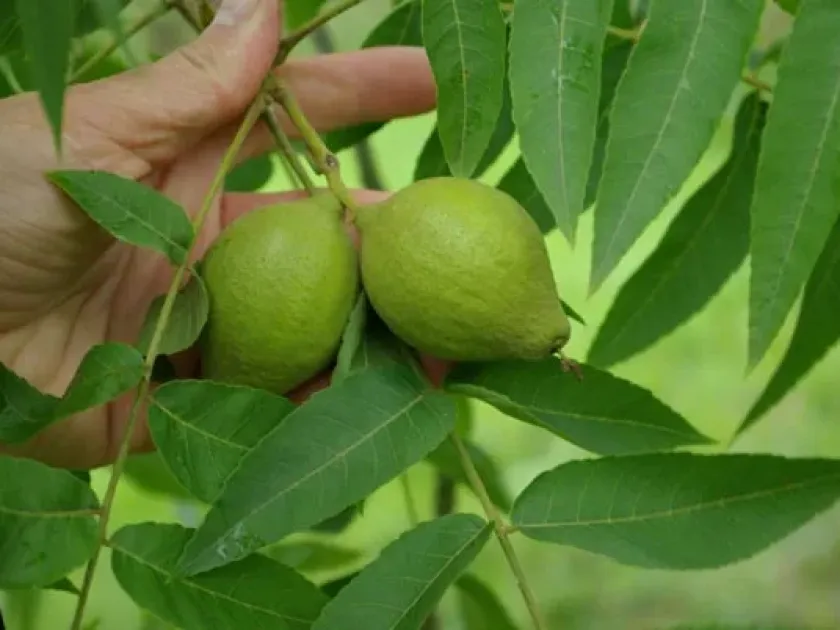
Description
Growing requirements
The hybrid Juglans major x Juglans regia is a crosses between the Arizona walnut (a drought-tolerant species) and the common or Persian walnut. Belonging to the Juglandaceae family, this hybrid is gaining interest among researchers for its ability to combine the superior nut quality of Juglans regia with the environmental hardiness of Juglans major.
This culture requires well-drained, deep soil profiles to accommodate a robust taproot system. It performs significantly better than the standard common walnut in alkaline or slightly limestone-rich soils, making it an excellent candidate for regions where standard orchards struggle with nutritional deficiencies.
Climatic requirements are moderate; the plant favors regions with long, warm growing seasons. While it displays enhanced cold tolerance due to the Arizona walnut lineage, site selection should avoid frost pockets to protect early spring blossoms. Proper air circulation within the orchard is vital to minimize moisture-related issues.
Agrotechnical management focuses on structural pruning and nutrient management. Because these hybrids are often more vigorous than their parents, they require adequate space. Periodic fertilization, balanced according to leaf analysis, ensures that the fast-growing trees maintain productivity throughout their lifespan.
The primary economic value of this hybrid lies in its use as a specialized rootstock. Growers utilize this cross to improve the environmental adaptability of commercial walnut cultivars. Furthermore, the hybrid holds potential for high-quality timber production, where the distinct grain patterns of both parent species can be utilized.
Main diseases and pests
The main pathological threats include walnut blight (caused by Xanthomonas arboricola) and anthracnose. These diseases are particularly prevalent in humid conditions and can lead to significant yield reduction if not managed through a structured spray program or by selecting resistant planting sites.
Insect pests, including the codling moth and various species of mites, pose a risk to fruit quality. Integrated Pest Management (IPM) strategies, including pheromone trapping and timely insecticide applications, are recommended to maintain tree health and ensure marketable harvest levels.