
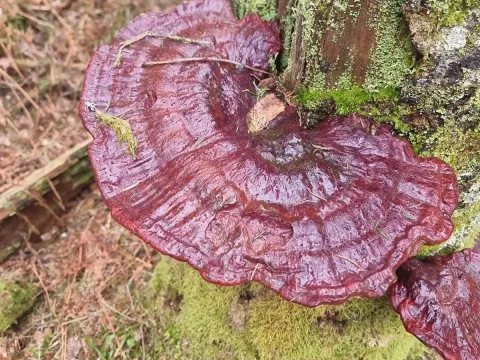
Ganoderma lucidum
Ganoderma lucidum
Ganoderma lucidum, commonly known as Reishi or the Lingzhi mushroom, belongs to the Ganodermataceae family. It is a wood-decaying fungus that is cultivated on specially prepared lignocellulosic substrates.
What the section contains
Ganoderma lucidum
The sowing process begins with the inoculation of a sterilized substrate with grain spawn. Timing the inoculation is critical to ensure that the environment can be strictly controlled for optimal growth.
Commercial production is typically continuous, utilizing climate-controlled chambers to maintain consistent conditions year-round, which allows for stable and predictable production cycles.
Inoculation must be performed in highly sterile conditions to prevent contamination. The substrate, usually composed of hardwood sawdust, rice bran, and gypsum, is packed into bags and sterilized before the spawn is added.
Once inoculated, the bags are kept in a dark incubation room where the mycelium gradually colonizes the substrate over a period of 4 to 6 weeks, preparing for the fruiting stage.
High humidity levels are essential for the development of Ganoderma lucidum, typically requiring an ambient humidity between 85% and 95% to prevent the fruiting bodies from drying out.
Temperature management is vital, with the fungus thriving in a range between +22°C and +28°C. Fluctuations outside this range can significantly inhibit growth and affect the quality of the harvest.
Unlike many other mushrooms, Ganoderma requires diffused light during the fruiting phase to ensure proper structural development and the synthesis of beneficial phytochemicals.
Adequate ventilation is necessary to manage CO2 levels. Excessive carbon dioxide leads to morphological deformities, such as thin stalks and the absence of the characteristic caps.
The substrate must provide balanced nutrition. A mixture of oak or beech sawdust supplemented with organic nitrogen sources is ideal for supporting vigorous mycelial growth and fruit production.
The yield of Ganoderma lucidum is measured by biological efficiency. A well-managed substrate can yield approximately 150 to 250 grams of dried mushrooms per kilogram of dry substrate.
The total production cycle, from inoculation to harvesting, takes roughly 2 to 3 months. The duration depends heavily on the specific strain of the fungus and the environmental control precision.
Maximizing yield requires careful attention to spawn quality and the density of the substrate packing, which directly influences the overall mass and health of the final fruiting bodies.
While some growers attempt multiple flushes, the first flush is generally the most productive and consistent in quality, often accounting for the majority of the total harvest yield.
As the product is intended for nutraceutical use, yield is often secondary to the chemical profile of the mushroom, focusing on the concentration of polysaccharides and triterpenes.
The primary threats to successful cultivation are opportunistic molds such as Trichoderma and Aspergillus, which can rapidly outcompete the Reishi mycelium if sterilization protocols are breached.
Bacterial contamination can lead to soft rot and unpleasant odors, rendering the mushrooms unsellable. This often occurs when humidity is poorly controlled or ventilation is insufficient.
Pests like fungus gnats and mites can cause extensive damage by tunneling through the mycelium and developing fruit bodies, leading to significant cosmetic and structural losses.
Integrated pest management, including regular sanitation of the growing environment and the use of insect screens, is the most effective way to protect the crop from infestation.
Proactive disease prevention centers on maintaining absolute cleanliness during the inoculation process and strictly monitoring environmental parameters throughout the growth cycle.
Harvesting should occur when the margin of the cap stops growing and the cap reaches its full, hardened state. This is marked by the loss of the white, active growth zone at the edges.
Timing is crucial; harvesting must happen before the release of spores begins, as spore shedding can deplete the mushroom's medicinal compounds and diminish its visual appeal.
Mushrooms are harvested by cutting the stalk close to the substrate with a sharp, sanitized blade, ensuring minimal damage to the substrate block for potential further flushes.
Post-harvest, the mushrooms must be dried quickly at temperatures below +50°C. This preserves the medicinal integrity of the compounds while ensuring the product is shelf-stable.
Storage of the finished product requires airtight containers in a cool, dark, and dry environment to prevent moisture re-absorption and the degradation of active ingredients.