
Reference · Crops
Agrocybe
Agrocybe
The cultivation of Agrocybe aegerita requires careful substrate preparation. Inoculation of the spawn is performed year-round in climate-controlled facilities, although spring and autumn are traditionally preferred for setting up the blocks.
2
items
What the section contains


Marketplace
Products in this section · 2

Agrocybe
Specialized substrate blocks consisting of hardwood sawdust, straw, or wood chips are used for planting. Before inoculation, the substrate must undergo pasteurization or sterilization to eliminate potential competition from mold fungi.
Agrocybe mycelium exhibits high growth energy and colonizes the nutrient medium rapidly. The incubation period at temperatures between 22 and 24 degrees Celsius typically lasts from 3 to 5 weeks, depending on substrate density.
Once the block is fully colonized by mycelium, the temperature in the chamber is lowered to trigger the formation of fruiting bodies. From the appearance of primordia to the harvest stage, it takes about 10 to 14 days.
Maintaining strict sterility during the inoculation phase is critical, as any contamination at this stage can result in the complete failure of the culture before the fruiting phase even begins.
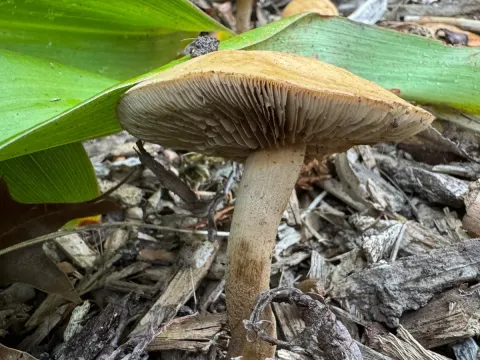
Agrocybe belongs to the Strophariaceae family and is a lignicolous fungus that naturally decomposes wood. Its native range covers temperate and subtropical regions where it grows on stumps and trunks of deciduous trees.
In artificial environments, the culture requires a relative humidity of 85–90% for successful development. Lack of moisture leads to cracking of the mushroom caps and stalls the growth of the mycelial network.
The temperature regime for the fruiting phase should be maintained between 16 and 20 degrees Celsius. Higher temperatures may promote faster growth but can compromise the density and texture of the mushroom flesh.
Ambient light is a mandatory requirement for proper development. Unlike many other fungi, agrocybe needs diffused light with an intensity of 500–1000 lux to ensure correct pigmentation of the caps.
The ventilation system must provide constant airflow. Excessive carbon dioxide levels in the chamber lead to the deformation of stems and result in small, underdeveloped mushroom caps.
The biological efficiency of agrocybe cultivation ranges from 20% to 35% of the dry substrate weight. Under intensive production conditions, one ton of substrate can yield up to 250 kg of marketable product per cycle.
Harvesting is performed in waves, with breaks in between to allow the mycelium to recover. Generally, one block can support up to 4 flushes of mushrooms, although each subsequent flush is typically less productive than the previous one.
Using nutritional additives like wheat bran can increase yields, but their proportion should not exceed 10–15% of the total volume to prevent overheating of the substrate during the incubation period.
The size of the mushrooms is closely related to the quality of ventilation and inoculation density. Overcrowding leads to competition for nutrients, resulting in smaller individual mushroom specimens.
Systematic monitoring of the substrate blocks allows for the timely removal of spent units, which prevents the spread of pests and diseases within the cultivation facility.
The main threats to the culture are mold fungi, such as Trichoderma, which rapidly colonize non-sterile substrates. This is the primary cause of crop failure during the incubation stage.
Among pests, fungus gnats and phorid flies are the most dangerous. Their larvae can penetrate the stems of the mushrooms, rendering them unsuitable for food consumption.
Bacterial spotting occurs due to excessive moisture on the surface of the caps combined with poor air circulation. This results in slimy, dark patches that ruin the commercial value of the product.
Disease prevention is based on strict adherence to hygiene protocols for staff and the sterilization of work tools. Using certified, high-quality spawn minimizes infection risks significantly.
If outbreaks of infection are detected, affected blocks must be immediately isolated and removed from the chamber to prevent further spore contamination of the remaining batch.
Harvesting agrocybe is conducted at the stage of technical maturity, when the cap has not yet fully flattened and retains a slight curvature at the edges. At this point, the mushrooms possess the best flavor and texture.
Mushrooms should be harvested by carefully cutting them with a sharp knife or twisting the cluster out of the substrate, taking care not to damage the surface of the block to avoid rot development.
The harvested product is very sensitive to physical impact and requires careful packaging in perforated containers, which allow the mushrooms to breathe during transport and storage.
The shelf life of fresh mushrooms in a refrigerator (at 2–4 degrees Celsius) is no more than one week. For long-term storage, drying or freezing is used to preserve the mushroom's distinct nutty flavor.
After each harvesting wave, the surface of the substrate block must be cleaned of stump residues to prepare the medium for the development of the next generation of fruiting bodies.