
Lingzhi mushroom
Ganoderma lingzhi Sheng H. Wu, Y. Cao & Y.C. Dai
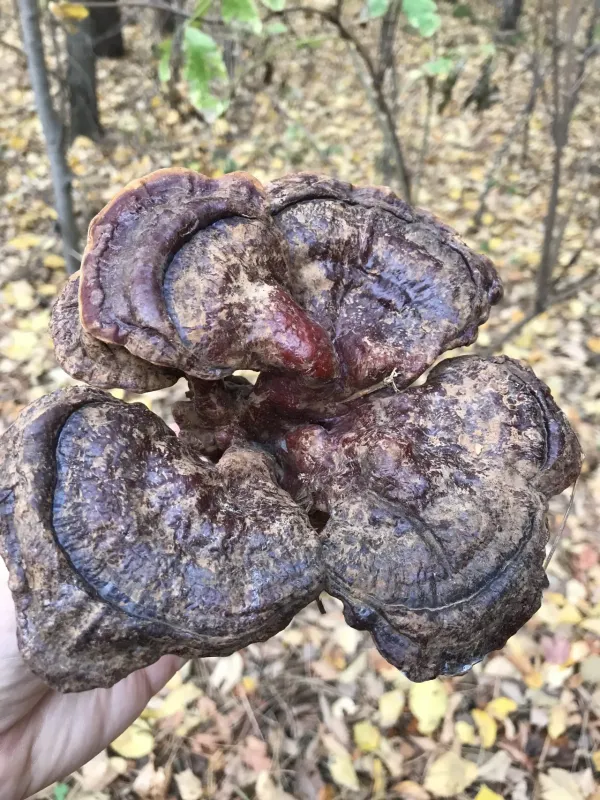
Description
Sowing dates
Ganoderma lingzhi, belonging to the Ganodermataceae family, is cultivated commercially through the inoculation of sterilized substrates with pure grain spawn.
The substrate typically consists of hardwood sawdust supplemented with rice bran, wheat bran, or corn flour to provide the necessary nutrients for the mycelium.
After inoculation, the substrate bags are kept in an incubator at temperatures between 25°C and 28°C until the mycelium completely colonizes the medium.
Proper sanitation during the inoculation process is crucial to prevent contamination by wild molds and bacteria, which can ruin the mushroom blocks.
Once the blocks are fully colonized, they are moved to a fruiting chamber where fresh air and light are provided to stimulate the development of the mushroom.
Growing requirements
This mushroom species requires a tropical to subtropical climate, with temperatures maintained strictly between 22°C and 28°C throughout the growth phase.
Relative humidity must be kept high, ideally between 85% and 90%, to prevent the fruiting bodies from drying out or hardening prematurely.
Unlike many other cultivated mushrooms, Ganoderma lingzhi requires significant light exposure to develop its characteristic glossy, red-brown, lacquered cap.
Adequate ventilation is essential to regulate CO2 levels, as excessive carbon dioxide causes the mushroom to develop long, antler-like stems instead of caps.
The choice of wood species, such as oak or alder, significantly influences the quality and medicinal properties of the final product.
Yield
Yields for Ganoderma lingzhi are measured by the biological efficiency, which typically ranges from 15% to 25% of the substrate's dry weight.
Optimizing the supplementation ratio in the substrate can help increase the size and thickness of the fruiting bodies, leading to higher revenue.
The harvest cycle is generally a one-time event per block, as the fungus focuses its energy on developing the main fruiting body over several months.
Commercial success depends on the ability to produce uniform, perfectly shaped mushrooms that meet medicinal industry standards for active compounds.
Monitoring the progress of each growth phase allows for the adjustment of humidity and temperature, ensuring maximum productivity per square meter.
Main diseases and pests
The primary threat to cultivation is the presence of green mold (Trichoderma), which outcompetes the fungus if the substrate is not properly sterilized.
Sciarid flies and fungus gnats pose a risk as they lay eggs in the substrate, and larvae can damage the root system and the developing mushrooms.
Bacterial diseases often appear as soft, mushy spots on the stems, usually caused by poor airflow and excessive moisture collection on the mushroom surface.
Environmental fluctuations often result in deformed mushrooms, which significantly reduces the market value of the harvested produce.
- Trichoderma (green mold)
- Sciarid flies
- Bacterial blotch
- Deformation due to CO2 excess
Harvesting
Harvesting is performed by carefully cutting the mushroom at the base of the stem, taking care not to disturb the underlying substrate block.
The ideal time to harvest is just before the mushroom begins to release its powdery brown spores from the underside of the cap.
Once harvested, mushrooms must be cleaned and immediately placed in a drying facility to maintain their quality and prevent rot.
Drying is typically done at low temperatures (approx. 45–50°C) to preserve the delicate polysaccharides and triterpenes that make the mushroom valuable.
Properly dried Ganoderma should have a hard texture and be stored in airtight containers to prevent it from absorbing moisture from the air.