
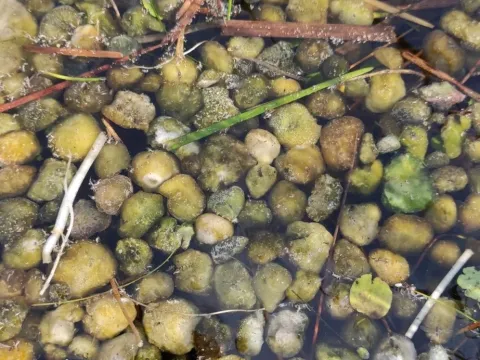
Aphanothece
Aphanothece Nägeli
Aphanothece is a genus of unicellular or colonial cyanobacteria belonging to the family Synechococcaceae. These organisms are widely distributed globally, inhabiting various aquatic ecosystems, moist soils, and even rock surfaces, demonstrating high environmental resilience.
What the section contains

Aphanothece
In controlled agricultural or industrial settings, Aphanothece requires a consistent temperature range between 25 and 30 degrees Celsius. Optimal development is achieved through precise photoperiod management and high-intensity lighting systems that support active photosynthesis.
The nutrient medium must be alkaline or neutral, enriched with essential nutrients like nitrogen, phosphorus, and trace minerals. Efficient nutrient delivery systems are crucial to prevent depletion and maintain rapid cell division rates during mass cultivation cycles.
This genus is notable for its nitrogen-fixing capabilities, which makes it an efficient and sustainable candidate for biomass production. Its ability to thrive in fluctuating salinity levels allows for the use of non-potable or brackish water sources in production facilities.
Economically, Aphanothece is valued for the extraction of high-value pigments, such as phycocyanin, and specific exopolysaccharides. These compounds are extensively used in food science, pharmaceuticals, and as natural colorants in the beauty industry.
The most severe threat to Aphanothece cultivation is contamination by cyanophages, which are highly specific viruses that can decimate entire production batches. Implementing strict sterilization protocols is the primary defense strategy for industrial producers.
The intrusion of opportunistic algae or invasive bacteria can lead to the displacement of the target culture. Such biological competition decreases biomass yield and creates significant difficulties in downstream processing and product purification.
Heavy metal accumulation in the culture medium acts as a potent inhibitor of biological metabolic pathways. This necessitates continuous water quality monitoring and the use of sophisticated filtration systems to maintain the culture's health.
Poor aeration or mixing within the bioreactor can result in localized zones of nutrient deficiency or gas exchange failure. These environmental stresses weaken the culture, making it susceptible to secondary microbial infections and structural cell damage.
Photo-oxidative stress occurs when light intensity exceeds the capacity of the photosynthetic apparatus. This leads to the destruction of pigments, loss of cellular integrity, and a significant drop in the overall biomass quality required for commercial output.