
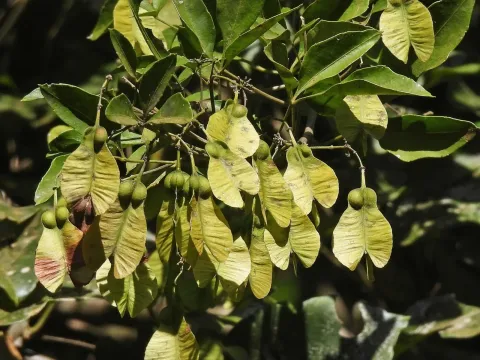
Thinouia
Thinouia
Thinouia belongs to the genus of woody vines, so its life cycle does not involve traditional seed sowing in field conditions. Propagation most often occurs naturally through the dispersal of fruits or vegetatively within the tropical forest environment.
What the section contains
Thinouia
If nursery cultivation is required, seeds should be sown immediately after collection, as they lose viability quite rapidly. The optimal time for planting is the beginning of the wet season, when high humidity promotes germination.
Seeds require pre-treatment such as scarification or soaking in warm water to accelerate the embryo activation process. The substrate for seedlings must be light, porous, and contain a high proportion of organic matter.
Sowing depth usually does not exceed 1-2 centimeters, mimicking the natural leaf litter layer in the forest. It is crucial to maintain a stable substrate temperature in the range of 25–28 degrees Celsius.
Young seedlings develop slowly and require shading, as direct exposure to intense sunlight at a young age can lead to leaf scorching.
Thinouia is a member of the Sapindaceae family, which includes many tropical species. Its natural range is restricted to the tropical and subtropical regions of Central and South America.
The plant prefers well-drained, fertile soils with a neutral or slightly acidic pH level. Water stagnation in the root system is detrimental to this species and can cause tissue decay.
To ensure healthy growth, the vine requires a support structure, as it has a pronounced ability to climb vertically using tendrils or by twining its stems. In its natural habitat, it acts as an important component of multi-layered forest vegetation.
The culture is extremely sensitive to low temperatures and cannot withstand even short-term frost. The optimal range for active growth is 22–30 degrees Celsius under conditions of high relative humidity.
In regions with a distinct dry season, the plant requires additional regular irrigation to maintain leaf turgor and active synthesis of vegetative biomass.
The economic use of Thinouia is primarily limited to medicinal applications in the traditional practices of indigenous South American peoples. Harvesting is carried out according to the maturation cycles of the fruits or the accumulation of active compounds in the bark.
Manual fruit collection is standard, involving the characteristic winged seeds common to many Sapindaceae. The process requires caution to avoid damaging the main stems, which possess a perennial structure.
When harvesting bark or leaves, it is essential to follow the principles of sustainable use, avoiding the complete removal of vegetative organs, which would lead to the death of the vine.
Harvested material undergoes necessary drying in shaded, well-ventilated areas to prevent mold fungus development and to preserve the chemical composition of the plant material.
Storage of the dried raw material is conducted in airtight containers in a dark, dry place, as UV radiation exposure can degrade certain biologically active compounds within the plant tissues.