
Lansium
Lansium domesticum Corrêa
Description
Sowing dates
Lansium belongs to the Meliaceae family and is an evergreen tree that can reach heights of up to 30 meters in its natural habitat. Propagation is typically achieved via seeds, though vegetative methods such as grafting or air layering are preferred for maintaining superior cultivar traits.
Seeds of the Lansium fruit lose viability very quickly after extraction, necessitating immediate sowing in a nutrient-rich, well-draining medium. Germination requires consistently high humidity and ambient temperatures ranging between 25 and 30 degrees Celsius.
Young seedlings exhibit a slow growth rate, a characteristic trait of the species. During their early development stages, the plants require shade, as direct exposure to intense sunlight can cause leaf scorch and significantly retard the development of the sapling.
Transplanting to the permanent location is performed once the tree has reached sufficient height and possesses a well-established root system. It is vital to ensure adequate spacing between trees, as the canopy of a mature Lansium tends to spread extensively.
In commercial orchards, planting is scheduled at the onset of the rainy season, allowing the tree to acclimate to its new environment and establish roots before periods of moisture stress occur.
Growing requirements
Lansium is a strictly tropical crop that demands specific temperature conditions. Optimal growth is observed in humid tropical zones characterized by the absence of extreme temperature fluctuations and frequent, consistent rainfall.
The plant thrives in deep, fertile, organic-rich loam soils with excellent water permeability. High water tables can be detrimental to the roots, making site selection based on drainage analysis a critical aspect of orchard establishment.
Protection from high-velocity winds is essential, as physical damage to branches and fruit clusters can occur easily. Orchards are often situated in valleys or wind-sheltered zones where high humidity is maintained throughout the year.
Regular irrigation is necessary, especially during the active fruiting phase. Even brief periods of drought can lead to fruit drop and poor harvest quality, rendering an efficient irrigation infrastructure a prerequisite for successful cultivation.
The plant does not tolerate saline or highly alkaline soils. Agronomists recommend frequent pH monitoring to keep the growing medium within a slightly acidic to neutral range, which facilitates the optimal uptake of essential nutrients.
Yield
Fruiting begins relatively late for seed-grown trees, sometimes taking 10 to 15 years to produce a harvest. Grafted trees, however, can provide their first commercial yield within 3 to 5 years, making them the preferred choice for commercial farming.
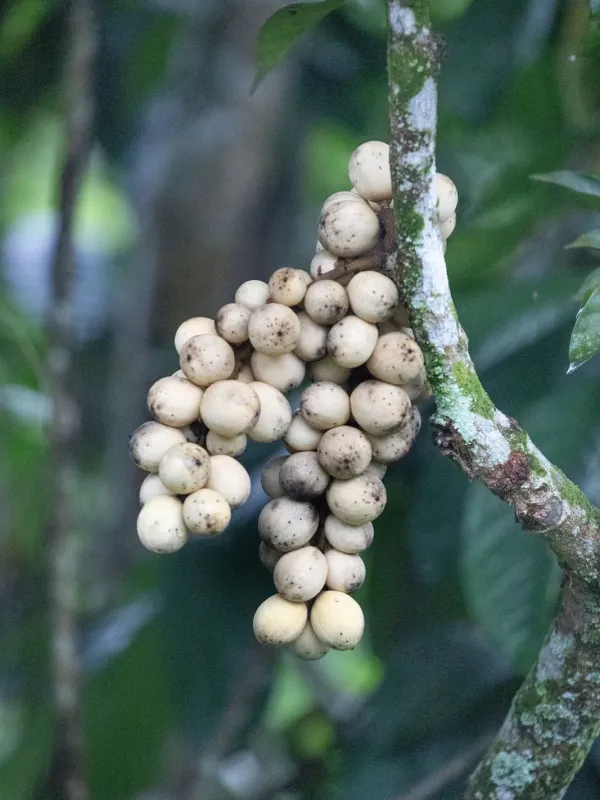
Fruits are produced in clusters directly on the trunk and large branches of the tree, a botanical phenomenon known as cauliflory. A single cluster can hold up to twenty individual oval-shaped fruits.
Ripe fruits feature a light yellow peel and a translucent, succulent pulp with a delicate sweet-and-sour flavor. Their high sugar and vitamin content makes them highly sought after in both local markets and the export sector.
Total yield per mature tree varies based on cultivar, nutritional management, and tree age. Consistent care and balanced fertilization protocols allow for sustained high productivity over several decades.
To optimize harvest volume, annual sanitary pruning is performed. This practice improves air circulation and light penetration to the inner canopy, stimulating the development of new flower clusters and subsequent fruit set.
Main diseases and pests
Primary pests affecting Lansium include various sucking insects, such as mealybugs and scale insects. These colonize young shoots and leaves, feeding on plant sap and often fostering the development of sooty mold on the tree surface.
Larvae of certain fruit fly species can damage developing fruit, leading to premature decay and loss of marketability. Integrated pest management, including monitoring and timely application of insecticides, is necessary for effective control.
Fungal diseases, which proliferate in high humidity and stagnant air, can attack the bark and root systems. Prevention strategies focus on keeping the area beneath the canopy clean and promptly removing any infected plant debris.
Root-knot nematodes pose a hidden threat that can significantly weaken the tree. Adhering to strict nursery sanitation protocols and using only certified disease-free rootstock helps minimize infection risks during the early stages of growth.
- Periodic cleaning of trunks to remove lichens and moss.
- Constant monitoring of the canopy for pest infestations.
- Drainage management to prevent waterlogging and root rot.
Harvesting
Harvesting is performed exclusively by hand due to the high sensitivity of the fruit to physical impact. Clusters are carefully cut with pruning shears; any rough handling causes the thin peel to darken rapidly, rendering the fruit unsellable.
Maturity is judged by the color transition of the peel to a characteristic yellow and the ease with which the fruit detaches from the stem. Since fruits do not ripen off the tree, precise timing is required to ensure harvest occurs at peak physiological maturity.
After collection, clusters are cleaned of debris and sorted by size and condition. Damaged items are immediately discarded to prevent rot from spreading through stored inventory during the supply chain process.
Lansium has a limited shelf life post-harvest, requiring rapid logistics. Freshness is maintained by keeping fruits in cool, well-ventilated storage facilities with controlled relative humidity.
During transport, it is crucial to use protective packaging that prevents compression and overheating, as the pulp is highly perishable and susceptible to rapid fermentation if damaged.