
African Tulip Tree
Spathodea campanulata P. Beauv.
Description
Growing requirements
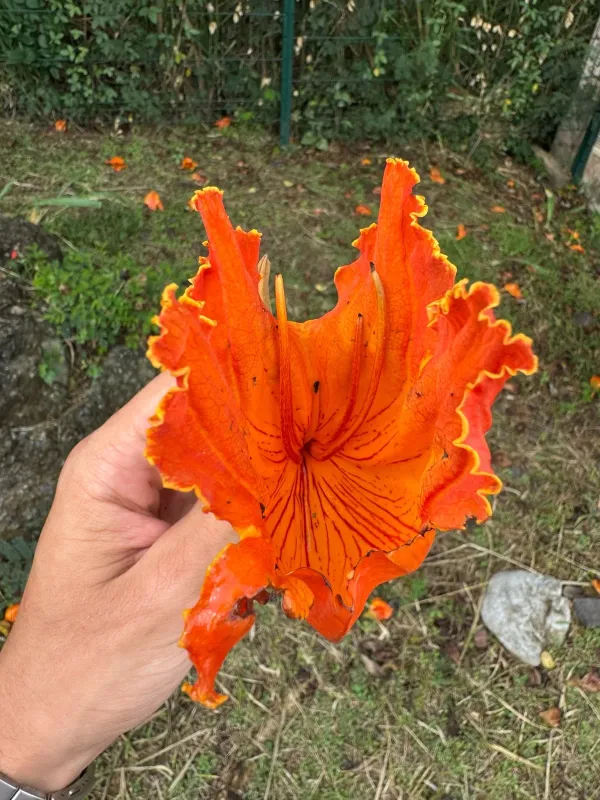
The African Tulip Tree (Spathodea campanulata) is a prominent ornamental species belonging to the Bignoniaceae family. Renowned for its brilliant, flame-colored, bell-shaped flowers, it serves as a staple in tropical landscaping and urban forestry.
Native to tropical Africa, this species thrives in humid equatorial environments. It is cultivated extensively in various tropical regions globally, where it is valued for its rapid growth rate and ability to provide significant shade in hot climates.
Climatic requirements are strict: the tree requires a frost-free environment and consistent heat. It is sensitive to cold damage, meaning that its cultivation is restricted to tropical and strictly controlled greenhouse environments in temperate regions.
Soil preferences include deep, fertile, and well-drained substrates. While it adapts to a variety of soil types, it performs best in slightly acidic to neutral soils that prevent waterlogging, which is essential for maintaining a healthy and robust root system.
Cultural practices focus on ensuring adequate sunlight, as shade inhibits flowering. Regular moisture is required during the establishment phase, while established trees demonstrate moderate drought tolerance. Periodic pruning is necessary to maintain structural integrity and control the canopy size.
Main diseases and pests
The primary pathological threats include fungal infections, specifically root rot, which typically results from poor soil drainage or excessive irrigation. Preventing soil saturation is the most effective management strategy against these pathogens.
Pests are generally not a major concern; however, occasional infestations of aphids and scale insects can occur on young growth. In agricultural or horticultural settings, these are managed through targeted pruning or application of integrated pest management practices.