
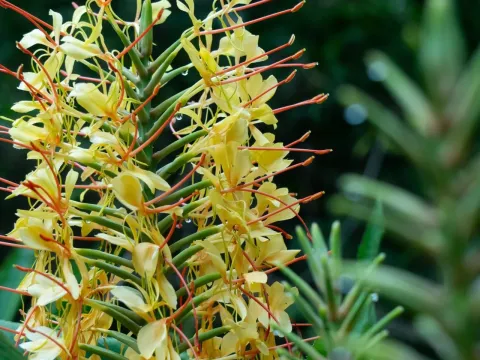
Hedychium
Hedychium J.G. Koenig
Hedychium is a genus of flowering plants belonging to the family Zingiberaceae, known primarily for their showy and often fragrant flowers. These rhizomatous perennials originate from the tropical regions of Asia, specifically the Himalayas and the Indian subcontinent.
What the section contains

Hedychium
The plant features upright leafy stems and terminal spikes of complex flowers. Botanically, the foliage is lanceolate and arranged in two rows, creating a dense, lush appearance that is highly valued in both ornamental horticulture and landscape design.
Cultivation requires a climate that mimics tropical conditions, characterized by warm temperatures and high humidity throughout the growing season. Frost is detrimental to the plant, and in temperate climates, cultivation is restricted to climate-controlled greenhouses.
Soil requirements involve a rich, well-draining medium with a slightly acidic pH level. A mix of organic matter, peat, and grit is ideal to prevent waterlogging, as the rhizomes are highly susceptible to rotting in stagnant, heavy water conditions.
Proper agronomic care includes frequent irrigation during the summer months and a consistent fertilization schedule. High-nitrogen fertilizers are often used during the vegetative stage, followed by phosphorus-rich formulations to support the development of inflorescences.
Spider mites are the most common pests, particularly in indoor environments where air circulation is restricted. Regular misting and the maintenance of adequate humidity levels are effective cultural methods for controlling mite populations.
Rhizome rot, caused by various soil-borne pathogens, is a significant threat to crop health. This is typically managed by strict adherence to irrigation protocols and the use of sterile growing media during the initial planting stages.
Aphids can colonize the growing tips and flower buds, causing deformation and reducing the overall decorative quality of the spikes. Contact or systemic insecticides are employed when the threshold for pest damage is exceeded.
Leaf spot diseases, caused by fungal pathogens such as Cercospora, can appear in humid, low-ventilation environments. Pruning affected leaves and improving air movement around the plants are essential to mitigate the spread.
Nematode infestations can damage the root system, leading to stunted growth and poor flowering performance. Pre-planting soil treatment and the selection of disease-free propagation material are standard industrial practices for crop protection.