
Serbian ramonda
Ramonda serbica
Description
Growing requirements
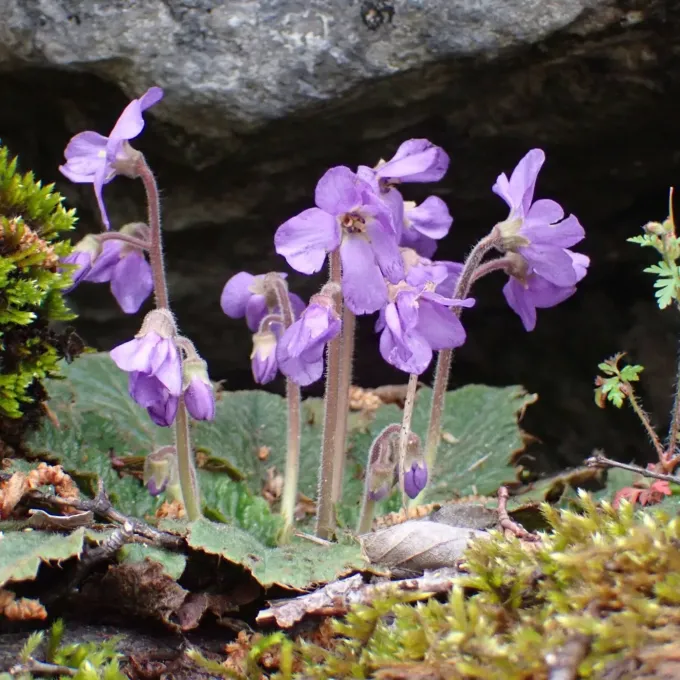
Serbian ramonda (Ramonda serbica) is a perennial flowering plant belonging to the Gesneriaceae family. It is an endemic species primarily found in the rocky, shaded crevices of the Balkan Peninsula, demonstrating remarkable environmental adaptation.
The plant features a distinct basal rosette of dark green, wrinkled leaves. These leaves possess the unique physiological ability to desiccate during drought and rehydrate fully when moisture becomes available, a trait known as poikilohydry.
Cultivation requires conditions that mimic its natural habitat. It thrives best in partial shade, where it is protected from harsh midday sun, which can easily scorch its sensitive foliage.
The substrate must be highly porous, consisting of a mix of leaf mold, grit, and limestone rock fragments. Proper drainage is the most critical factor for success, as waterlogged soil leads to rapid crown rot.
In terms of temperature, it prefers cool, temperate conditions. It is known for its hardiness but requires a location with excellent air circulation to prevent stagnant humidity during the winter months.
Main diseases and pests
The primary threats to Ramonda serbica are root rot and fungal infections caused by excessive soil moisture and lack of proper aeration around the base of the plant.
Gastropods, particularly slugs and snails, are major pests. They are attracted to the succulent-like leaves and can cause extensive damage to the plant structure in a very short amount of time.
In greenhouse settings or controlled environments, pests like spider mites may occur if the ambient air is too dry or if ventilation is insufficient to maintain plant health.
Secondary infections often follow physical damage to the leaves. Maintaining a clean growing environment and removing decaying leaves is essential for long-term health.
To manage these threats, cultivators should focus on preventative care: providing excellent drainage, placing slug barriers, and ensuring a stable, cool environment with sufficient airflow.