
Mitraria coccinea
Mitraria coccinea
Description
Growing requirements
Mitraria coccinea is an evergreen shrub belonging to the Gesneriaceae family. Originating from the temperate rainforests of Chile and Argentina, this plant requires specialized microclimatic conditions to thrive in cultivation.
The plant demands high humidity levels and protection from direct, intense sunlight. In a greenhouse or indoor environment, it should be kept in a partially shaded location where temperatures remain moderate throughout the year, ideally between 15°C and 22°C.
The soil requirement for Mitraria is a well-draining, acidic medium. A mixture of peat, perlite, and bark is highly recommended to replicate its natural epiphytic habitat, ensuring that the root system has access to both moisture and oxygen.
Watering must be performed with caution. Using soft, dechlorinated water is essential, and the substrate should remain consistently moist but never waterlogged. Proper drainage is the most critical factor in preventing root damage.
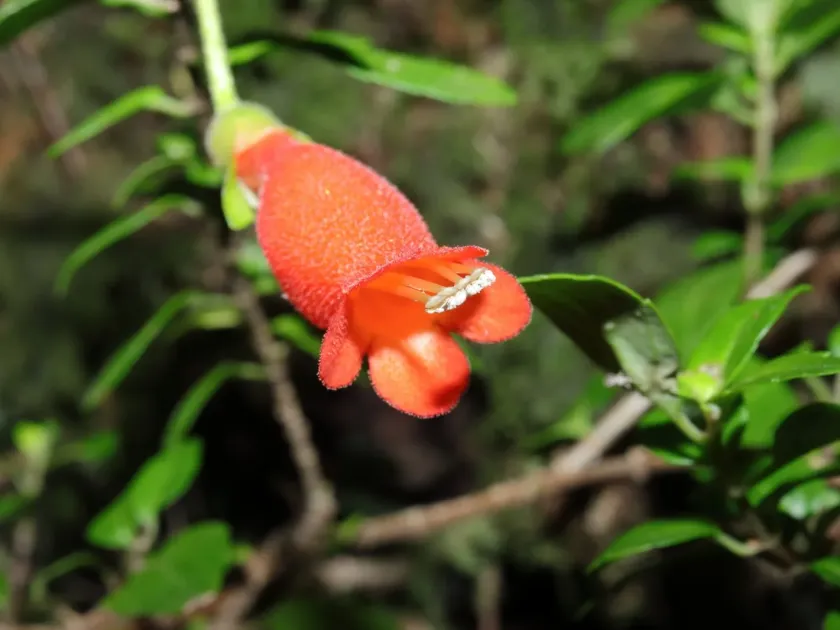
In terms of agricultural and horticultural utility, Mitraria coccinea is prized for its ornamental value. Its brilliant red, tubular flowers make it a sought-after species for conservatory displays and collections of rare sub-tropical vegetation.
Main diseases and pests
The primary threats to this plant are common pests such as spider mites, mealybugs, and whiteflies. These insects proliferate in low-humidity environments, making consistent air moisture management a vital component of pest control.
Fungal diseases, particularly grey mold (Botrytis) and various types of root rot, are the most significant threats to plant health. Maintaining good air circulation and strictly following proper irrigation schedules are necessary to prevent these conditions.