
Kohleria
Kohleria Regel
Description
Growing requirements
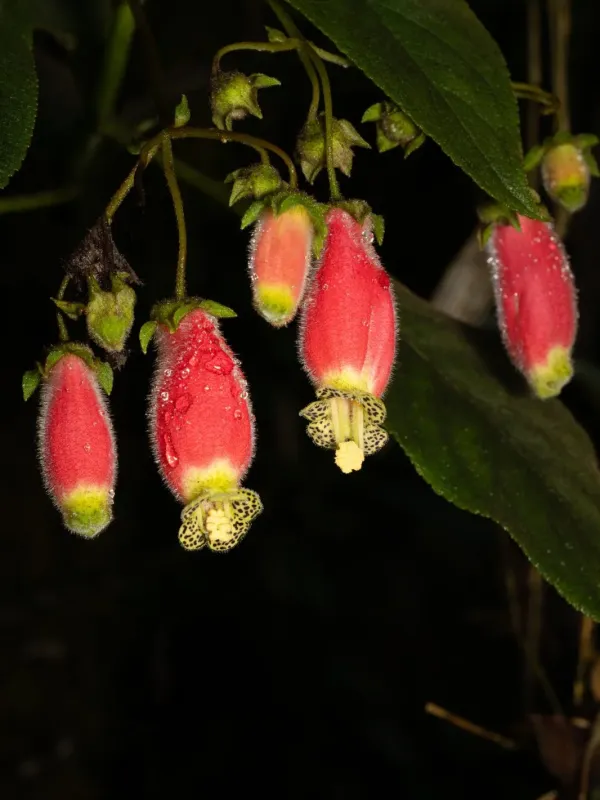
Kohleria (Kohleria Regel) is a perennial herbaceous crop belonging to the Gesneriaceae family. Originating from the tropical zones of Central and South America, these plants are prized for their vibrant, bell-shaped flowers and velvety, hairy foliage.
A key botanical feature of the genus is the production of scaly rhizomes, which allow the plant to survive adverse conditions. The stems are typically erect or spreading and are covered in fine trichomes, giving them a distinct texture and appearance.
For optimal growth, Kohleria requires bright, indirect light. Direct sunlight can scorch the foliage, while insufficient light leads to leggy stems and poor flower production. Maintaining a temperature range between 20°C and 25°C supports active vegetative growth.
The soil must be light, porous, and nutrient-rich. A well-draining potting mix, typically composed of peat moss, perlite, and leaf mold, is recommended to ensure adequate aeration around the rhizomes and roots, preventing fungal development.
Consistent moisture is vital during the growing season. Watering should be applied at the base of the plant to keep the foliage dry, as moisture trapped on the leaves can lead to decay. A period of rest is necessary after flowering to replenish energy for the next season.
Main diseases and pests
Spider mites are the most common pest, especially in environments with low humidity. They feed on the sap, causing mottled leaves and eventual leaf drop. Increasing ambient humidity or using acaricides is essential for control.
Root rot, caused by overwatering or poorly drained soil, is the most critical threat to the rhizomes. Once the rhizomes start to decay, recovery becomes extremely difficult, making prevention through drainage and controlled irrigation paramount.
Whiteflies can infest the undersides of the leaves, weakening the plant and encouraging the growth of sooty mold. Regular inspections and the use of insecticidal soaps are standard practices to keep populations in check.
Fungal leaf spots can occur when plants are kept in stagnant air conditions with high humidity. Proper airflow is essential for the health of the plant, as stagnant environments create perfect breeding grounds for various pathogens.
Mealybugs may colonize the leaf axils, appearing as white, cotton-like masses. They should be addressed immediately upon detection using systemic insecticides or by physically removing the insects with alcohol-dipped swabs.