

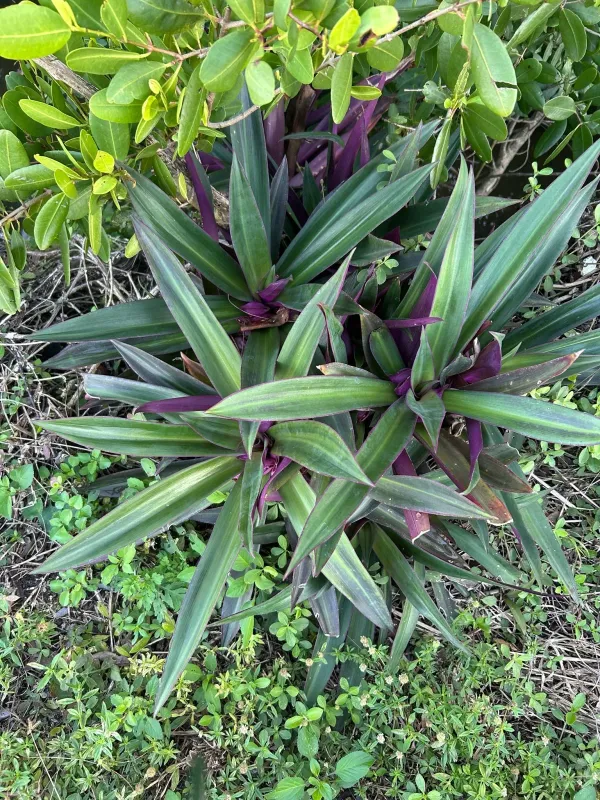
Description
Growing requirements
Rhoeo, scientifically classified as Tradescantia spathacea, is a perennial herbaceous plant belonging to the Commelinaceae family. It is native to tropical regions of Mexico and the West Indies, where it thrives in warm, humid forest environments.
Cultivation requires bright, indirect light to maintain the vibrant purple and green coloration of the foliage. While it can tolerate some shade, insufficient light will lead to legginess and a reduction in the density of the leaf rosettes.
The soil must be well-draining and nutrient-rich to support healthy development. A mixture of loamy garden soil, peat moss, and coarse sand or perlite is considered ideal for maintaining structural integrity and preventing moisture stagnation.
Temperature management is vital, with an optimal range between 20°C and 25°C. The plant should be protected from cold drafts and should not be exposed to temperatures below 15°C, as this can cause cold stress and tissue damage.
In commercial and private horticulture, Rhoeo is highly valued for its ornamental appeal as a container plant or groundcover in frost-free climates. Its rapid growth and ease of propagation make it a staple in the ornamental plant trade.
Main diseases and pests
The most common pests affecting Rhoeo are spider mites, which thrive in low-humidity environments and can cause visible yellowing and stippling on the leaves.
Scale insects and mealybugs can also infest the plant, clustering in the leaf axils and feeding on plant sap, which requires prompt treatment with appropriate pesticides.
Fungal infections, particularly root rot, are the primary physiological threats caused by overwatering or poorly draining soil mediums.
Leaves may develop brown spots or soft decay if fungal pathogens exploit conditions of stagnant air and prolonged high humidity without sufficient light.
Maintaining good hygiene, such as removing dead foliage and avoiding overhead watering, is essential for minimizing the impact of these typical plant diseases.
Content graph
Connections · Rhoeo
Most often together:
Marketplace