
Selenicereus minutiflorus
Selenicereus minutiflorus
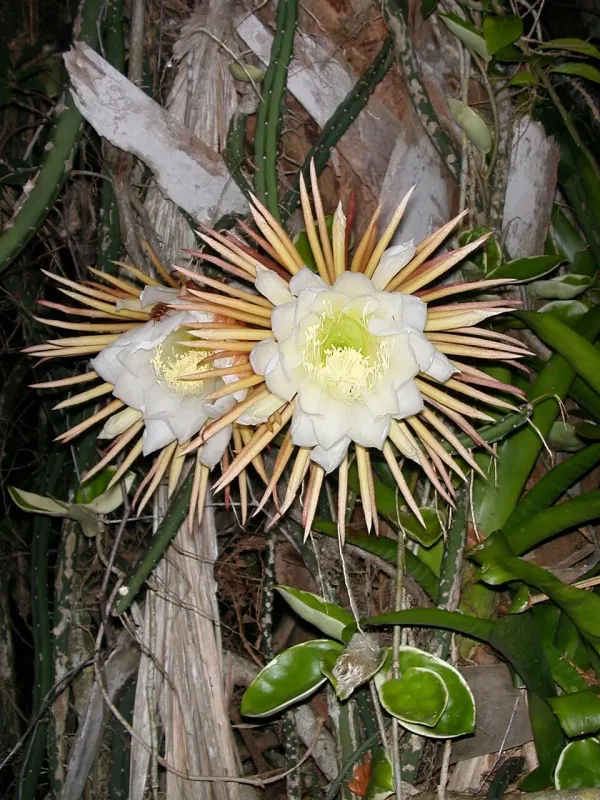
Description
Growing requirements
Selenicereus minutiflorus is an epiphytic cactus belonging to the Cactaceae family, native to the tropical rainforests of Central America. Unlike desert cacti, this species thrives in humid, shaded environments, utilizing trees as structural support for its sprawling stems.
The plant requires a strictly controlled tropical climate with temperatures ranging between +20°C and +28°C. It is highly sensitive to cold stress, making it unsuitable for outdoor cultivation in temperate regions without climate-controlled greenhouse protection.
Soil management for this culture demands a well-aerated, porous substrate with slightly acidic properties. A mixture of leaf mold, perlite, and coarse sand provides the necessary drainage to prevent root asphyxiation, which is common in compact garden soils.
Cultural practices involve moderate irrigation schedules where the substrate is allowed to reach partial dryness between waterings. Given its climbing nature, providing sturdy, non-metallic trellises or supports is essential for optimal growth and air circulation around the stems.
The economic utilization of this species is focused on ornamental horticulture and interior landscaping. Its specialized aesthetic appeal makes it a sought-after subject for botanical gardens and professional greenhouse displays specializing in rare tropical flora.
Main diseases and pests
Primary disease risks include root and stem rot caused by Phytophthora or Pythium species, triggered by over-irrigation or stagnant water in the root zone. Effective control requires rigid soil moisture monitoring and the application of appropriate systemic fungicides.
Pest management is focused on controlling mealybugs and spider mites, which exploit the plant’s succulent stems in low-humidity environments. Integrated pest management, including regular inspection and biological control agents, is the preferred method for long-term health.