
Selenicereus coniflorus
Selenicereus coniflorus
Description
Growing requirements
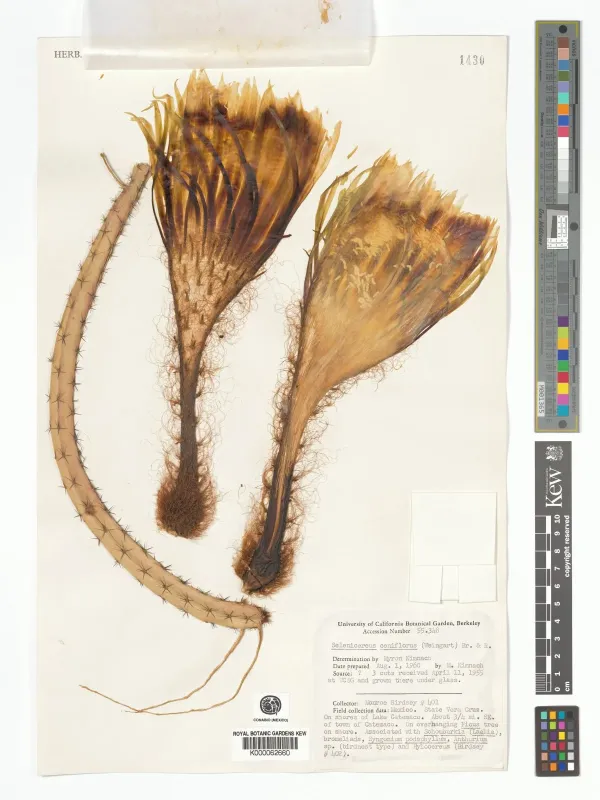
Selenicereus coniflorus is a climbing epiphytic cactus belonging to the Cactaceae family. It is native to the tropical forests of Mexico, where it grows as a vine, naturally adapting to a life suspended in the forest canopy.
The plant thrives in bright, indirect light conditions. Intense midday sun should be avoided to prevent tissue damage. Maintaining an ambient temperature between 20°C and 25°C is ideal for its active growth phase.
A well-draining, nutrient-rich substrate is essential for this species. A blend consisting of high-quality peat, leaf mold, coarse sand, and perlite helps mimic its natural habitat on decaying organic matter found on trees.
Irrigation management is crucial for the health of the plant. During the growing season, it requires consistent moisture, but water stagnation must be avoided at all costs to prevent the succulent stems from rotting.
The species is primarily utilized as an ornamental plant for specialized indoor collections and conservatories. Its night-blooming flowers are its most distinct feature, attracting pollinators with their nocturnal scent.
Main diseases and pests
Common pests include spider mites and mealybugs, which are particularly troublesome in warm, indoor environments. Regular monitoring and the application of mild horticultural oils can manage these infestations effectively.
Fungal diseases are often the result of improper drainage or poor air circulation. Symptoms include soft, mushy patches on the stems; affected parts should be removed promptly, and the watering frequency adjusted to restore balance.