
Opuntia tuna
Opuntia tuna
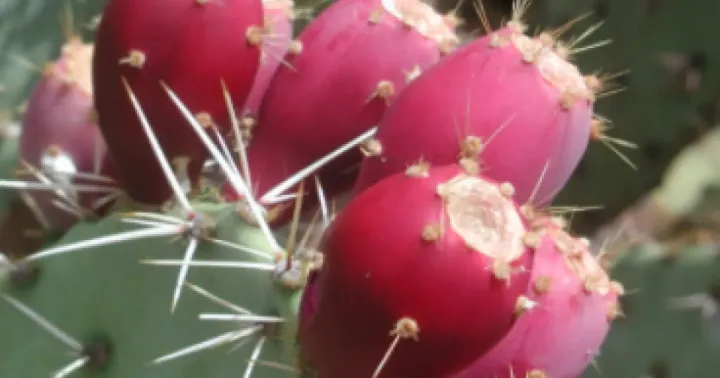
Description
Sowing dates
Opuntia tuna is a member of the Cactaceae family, widely recognized for its resilience and adaptability in arid agricultural environments.
The standard commercial propagation method involves the vegetative planting of mature stem pads, known as cladodes, which root readily in suitable substrates.
Planting is conducted during the active growth season, ensuring that the ambient temperature remains consistently high to stimulate rapid root development.
Before planting, the cut ends of the pads are left to dry for several days to allow a protective callus to form, preventing post-planting rot.
Cuttings are inserted into well-aerated soil at a shallow depth, usually around 5 to 10 centimeters, to maintain stability during the establishment phase.
Growing requirements
This crop thrives under full sun exposure, requiring high light intensity to maximize both vegetative growth and fruit production throughout the year.
Opuntia tuna demands well-drained soil, preferably sandy or sandy-loam, to prevent the moisture stagnation that is lethal to cactus root systems.
The plant exhibits remarkable drought tolerance, as its succulent structure is specifically designed to store water during periods of scarce rainfall.
Soil pH should ideally be neutral or slightly acidic; the plant performs poorly in compacted or heavy clay soils that lack sufficient oxygenation.
While adapted to hot climates, the plant requires protection from severe frost, which can cause internal cell rupture and permanent tissue damage.
Yield
The fruit of Opuntia tuna is highly valued in the food industry, being rich in antioxidants, vitamins, and minerals beneficial for human health.
In addition to fruit production, the cactus pads are increasingly utilized as sustainable livestock forage in regions facing severe water scarcity.
Optimal yields depend on proper plantation management, including selective pruning that balances fruit-bearing segments with vegetative growth.
Post-harvest processing includes the production of marmalades, natural food colorants, and specialized beverages that are popular in various international markets.
With consistent agricultural inputs, established plants remain productive for many years, offering a reliable harvest cycle under appropriate climatic conditions.
Main diseases and pests
Fungal pathogens, particularly those causing stem rot, represent the most significant threat to plantation health, especially when drainage is suboptimal.
Common pests include mealybugs and spider mites, which feed on the sap and cause aesthetic as well as structural damage to the cactus pads.
Integrated pest management, including the use of targeted biological controls and safe insecticides, is essential for maintaining crop vigor.
Regular monitoring for signs of infection, such as soft spots or discoloration, allows for early intervention and the removal of affected plant material.
Maintaining proper spacing between individual plants is crucial to ensure adequate airflow, which naturally reduces the risk of pest and disease outbreaks.
Harvesting
Fruit harvesting must occur only when the fruits reach full maturity, indicated by a change in color and a slightly yielding texture.
Safety protocols are critical during the harvest due to the presence of glochids, which are tiny, barbed bristles that can cause severe skin irritation.
Workers must wear protective gear and utilize specialized long-handled tools to avoid direct contact with the spines and glochids during the process.
Once harvested, the fruit is highly perishable and requires rapid cooling to maintain its internal quality and shelf life during transit.
Pruning spent pads immediately after the harvest cycle helps focus the plant's energy on new growth, ensuring higher yields for the following season.