
Potts' prickly pear
Opuntia pottsii
Description
Growing requirements
Potts' prickly pear (Opuntia pottsii) is a perennial succulent belonging to the Cactaceae family. Native to arid regions, it is characterized by its significant drought tolerance and ability to thrive in environments with limited water availability, making it a valuable subject for specialized crop management.
The plant requires well-drained, porous soils, typically sandy or rocky, to ensure healthy root development. It is highly susceptible to root rot if water stagnation occurs, necessitating a cultivation site that promotes rapid drainage or is situated on a slope.
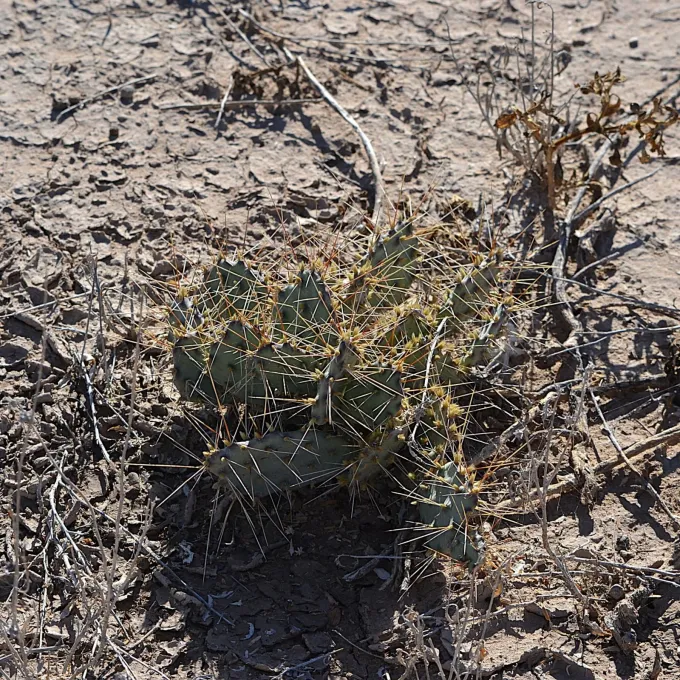
Environmental conditions for Opuntia pottsii involve high solar radiation levels, which are critical for both photosynthesis and the development of its characteristic flattened stems, known as cladodes. It is well-adapted to high daytime temperatures and can tolerate significant diurnal temperature fluctuations.
Agricultural management is relatively low-input. Maintenance involves controlled irrigation, specifically avoiding moisture during the winter dormant phase to prevent tissue decay. Fertilization should be minimized, focusing on phosphorus and potassium to enhance plant structural integrity and winter hardiness.
Economic utility of this crop spans multiple sectors. It is primarily utilized as emergency forage for livestock in semi-arid zones due to its high water content and nutritional value. Additionally, it serves as a windbreak and soil stabilizer, effectively preventing desertification in fragile ecological zones.
Main diseases and pests
Major phytopathological threats to Potts' prickly pear include fungal pathogens that cause soft rot and necrosis. Proper sanitation and ensuring adequate airflow between individual plants are the primary preventative measures against these destructive biological threats.
Insect pests, such as mealybugs and scale insects, frequently target the cladodes of the plant. Regular monitoring of the plant surface is essential, and targeted chemical or biological pest control programs should be implemented at the early stages of infestation to prevent yield losses.