
Woolly Joint Prickly Pear
Opuntia pilifera
Description
Sowing dates
Propagation of Opuntia pilifera is primarily performed through cuttings, which is the most reliable method for maintaining the characteristics of the mother plant. This ensures uniform growth across the plantation.
The best time for planting is during the active growth phase, typically in spring, when temperatures are consistently warm and the risk of frost has completely passed.
After taking a cutting, it is essential to allow the surface to callus in a dry, shaded area for several days. This process prevents bacterial and fungal pathogens from entering the plant tissues upon planting.
For seed propagation, a well-draining sandy substrate is required. Seeds should be sown at a shallow depth and kept at a temperature of approximately 25 degrees Celsius to trigger germination.
When planting in rows, ensure adequate spacing of at least 2 meters. This distance is vital for efficient mechanical maintenance and to promote natural air circulation, which reduces humidity around the base of the plants.
Growing requirements
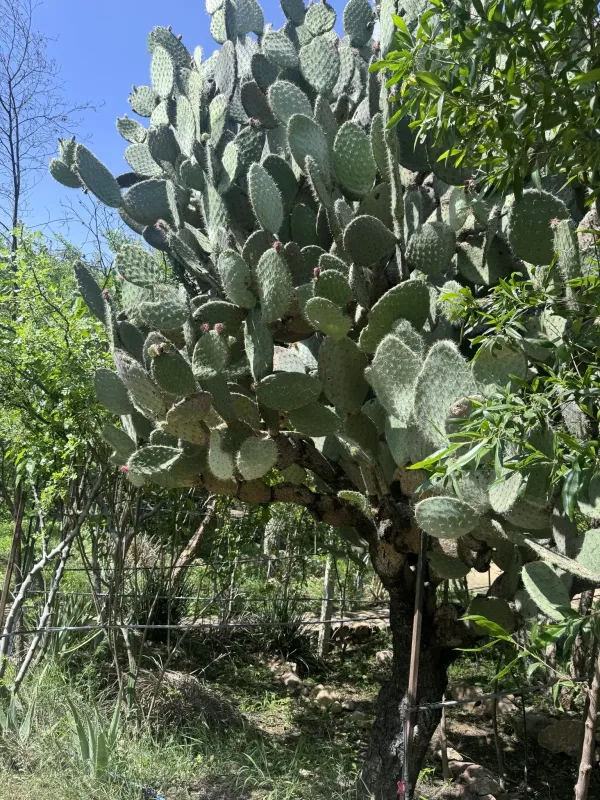
Opuntia pilifera, a member of the Cactaceae family, is characterized by its large, tree-like stature and the prominent white, hair-like spines that cover its stem segments.
Native to arid regions of Mexico, this species is exceptionally well-adapted to high temperatures and prolonged drought. It thrives in environments where standard crops would fail due to water scarcity.
The plant requires full sun exposure to maintain its structural integrity. Insufficient light results in weak growth, making the cactus prone to toppling and infection.
Soil requirements are straightforward: the medium must be highly porous and well-draining. Neutral to slightly alkaline pH levels are preferred to ensure optimal nutrient uptake and root health.
- Full sun exposure throughout the day.
- Exceptional soil drainage to prevent root rot.
- Protection from severe frost.
- Minimal, infrequent watering during the dormant season.
Yield
The primary agricultural use of Opuntia pilifera is as a drought-resistant fodder source. The segments are harvested, cleaned of their spines, and provided as succulent feed for livestock in desert areas.
The fruits of this cactus are edible and are highly valued for their sweet flavor and nutritional content, which includes essential vitamins and fiber for local diets.
Proper management of the plantation, including consistent pruning, can significantly increase the total yield of both biomass and fruit, ensuring sustainable harvests year after year.
The plant demonstrates high carbon sequestration potential, adding value to arid-land agriculture by improving soil stability and capturing carbon dioxide in its massive stem structures.
Harvesting should be handled with caution, using protective gloves and tools to manage the glochids and larger spines that protect the nutritious tissues of the plant.
Main diseases and pests
Fungal infections, specifically root and stem rot, represent the most significant threat to Opuntia plantations. These conditions are almost always exacerbated by stagnant water or excessively humid environments.
Mealybugs are the most persistent pests for this species. They cluster in the crevices between stem segments, feeding on the plant's sap and weakening the overall vigor of the cactus.
Spider mites can also become a problem during periods of extremely low humidity, causing stippling or discoloration on the surface of the cactus pads, which reduces the marketability of the product.
Integrated pest management is recommended, prioritizing cultural practices like proper plant spacing and careful moisture control over the heavy application of chemicals.
Sanitation is key; any pad showing signs of rot should be immediately removed and destroyed to prevent the spread of pathogens to healthy neighboring plants in the field.