
Plains prickly pear
Opuntia macrorhiza
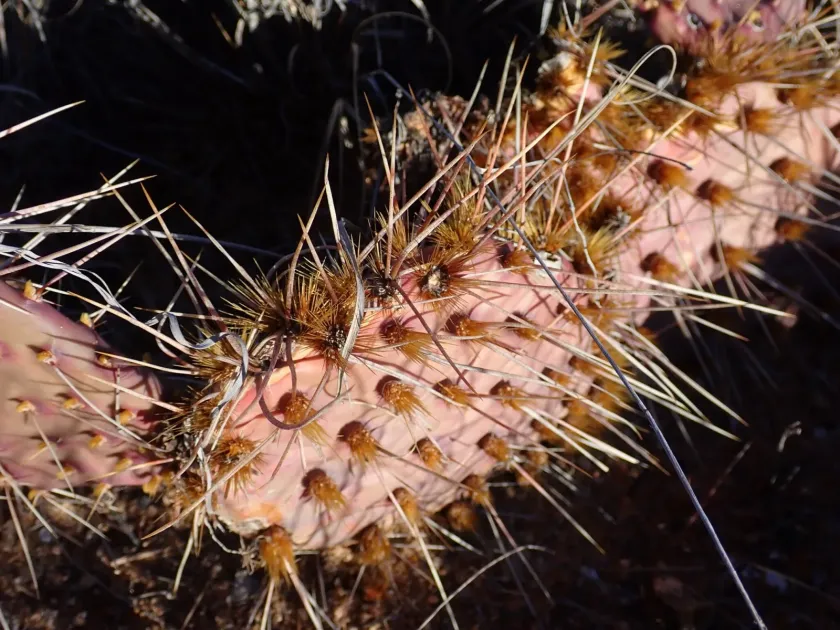
Description
Growing requirements
The Plains prickly pear (Opuntia macrorhiza) is a perennial succulent belonging to the Cactaceae family. It is distinct due to its fleshy, tuberous roots which act as storage organs for water and nutrients, enabling the plant to withstand harsh arid environments.
Originating from North America, this species is native to grasslands, prairies, and rocky outcrops. Its natural habitat dictates its physiological adaptations, which favor long periods of high light intensity and limited rainfall.
Successful cultivation requires well-draining, sandy or rocky soil. The plant cannot tolerate "wet feet," as stagnant moisture around the roots leads rapidly to root rot, which is the primary cause of plant failure in non-native environments.
The plant thrives in full sun exposure. While it adapts to a variety of temperatures, it is notably cold-hardy for a cactus, allowing it to survive in regions with significant winter cooling, provided the soil remains relatively dry during dormancy.
In agricultural practice, Opuntia macrorhiza is utilized for its edible fruits and as a supplementary forage crop, especially when spines are removed or spineless varieties are cultivated. It also serves as an effective soil stabilizer in erosion-prone areas.
Main diseases and pests
Fungal pathogens represent the most significant threat to the Plains prickly pear. High humidity levels combined with poor air circulation create an ideal environment for diseases that cause soft rot and necrosis of the succulent pads.
Insects like mealybugs, spider mites, and scale insects frequently infest the surface of the pads. These pests drain sap, causing the plant to weaken and become susceptible to secondary opportunistic infections.
Cactus moth larvae are particularly destructive, as they burrow into the interior of the pads, hollowing them out. This damage often destroys the structural integrity of the plant and can be difficult to manage once an infestation is established.
Preventative maintenance involves ensuring proper spacing between plants and maintaining a clean, weed-free area to improve air flow. Avoid overhead irrigation, as water trapped on the pads can facilitate fungal growth.
Integrated pest management, involving both physical removal of pests and targeted chemical applications, is necessary when natural controls fail. Always monitor plants during the growing season for early signs of distress.