
Purple prickly pear
Opuntia macrocentra
Description
Growing requirements
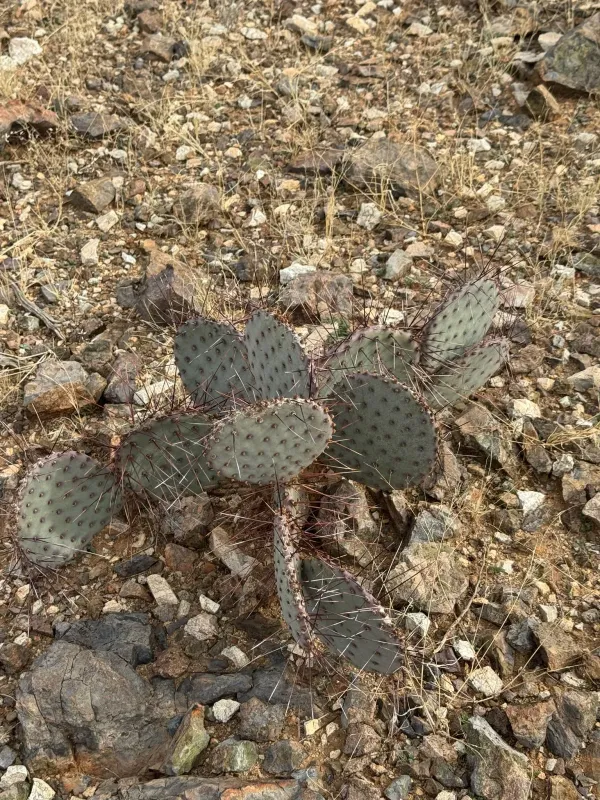
Purple prickly pear (Opuntia macrocentra) is a distinctive perennial member of the Cactaceae family, native to the arid regions of the southwestern United States and northern Mexico. It is widely recognized for its purple-tinted pads that serve as a natural defense against intense desert radiation.
The cultivation of this crop requires mineral-rich, well-draining soil with a significant portion of gravel or coarse sand. It thrives in environments where soil moisture does not linger around the root zone, as the species is highly susceptible to tissue rot in stagnant water conditions.
Climate requirements include high solar exposure to maintain its coloration and structural integrity. Opuntia macrocentra is adapted to handle extreme heat during the day and cooler temperatures at night, reflecting its natural desert habitat.
Agrotechnical maintenance focuses on a strictly controlled watering schedule. During the active growing season, water should be applied only when the substrate has completely dried out. In the dormant season, water intake should be reduced to near zero to prevent frost-related cell rupture.
The plant demonstrates a unique physiological ability to thrive in poor soils, but consistent success in professional settings requires an optimized substrate that mimics natural desert terrain, combined with adequate ventilation to prevent fungal outbreaks.
Main diseases and pests
Root rot caused by fungal pathogens is the most lethal threat to Purple prickly pear, especially in regions with high humidity or poor drainage. Proper air circulation and soil aeration are essential to mitigate this risk.
Mealybugs are the primary pest concern, often hiding in the dense clusters of spines where manual removal or specific systemic insecticides are required. These pests drain plant nutrients and invite secondary infections.
Spider mites can also impact the plant during hot and dry spells, manifesting as small, mottled lesions on the pads. Early detection through regular monitoring can prevent widespread infestation across the crop.
Physical damage to the pads, such as cracks or punctures, serves as an entry point for bacteria. All pruning or propagation activities must be performed using sanitized tools to ensure the plant remains pathogen-free.
Maintaining a dry environment around the base of the plant and keeping it away from overhead irrigation systems is a vital cultural practice to minimize the incidence of common cactus diseases.