
Engelmann's prickly pear
Opuntia engelmannii
Description
Sowing dates
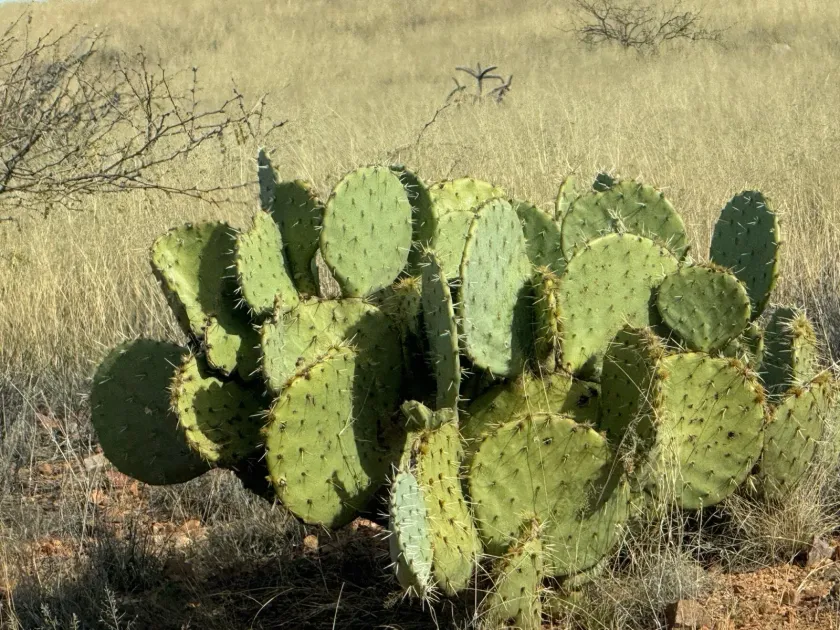
Engelmann's prickly pear (Opuntia engelmannii) belongs to the Cactaceae family. This perennial succulent is native to the arid landscapes of the Southwestern United States and Northern Mexico, showing remarkable adaptation to harsh environments.
In commercial agriculture, the primary propagation method is vegetative. Individual cladodes (stem pads) are harvested and rooted, which ensures the consistency of desirable traits and rapid establishment of new plants compared to seeds.
Planting should occur after the danger of frost has passed and the soil has warmed sufficiently. It is essential to let the cut end of the pad callus over for several days before planting to prevent rot caused by soil pathogens.
The pads are typically buried about one-third of their length in the soil. Proper anchoring is crucial during the early stages of growth to prevent the heavy pads from toppling over before a robust root system develops.
While seed propagation is possible, it is rarely used in large-scale farming due to the significantly longer time required for the plant to reach maturity. Seed methods are generally reserved for breeding and genetic variety development.
Growing requirements
Engelmann's prickly pear requires full, intense sunlight to thrive. Inadequate light exposure leads to etiolation, where the plant develops thin, weak growth that is highly susceptible to pests and diseases.
The plant demands well-draining, sandy, or rocky soil with a neutral to slightly alkaline pH. Good drainage is the most critical factor, as stagnant moisture around the roots will inevitably trigger fungal infections.
This species is highly drought-tolerant, utilizing CAM photosynthesis to conserve moisture. It can survive in extremely dry regions, storing water in its thick, fleshy stems to sustain growth during prolonged periods without rainfall.
Ideal growth occurs in temperatures ranging from 25 to 35 degrees Celsius. While it is hardy and can withstand occasional light freezes, consistently high temperatures during the growing season are preferred for maximum biomass production.
Balanced fertilization with emphasis on phosphorus and potassium is recommended during the active growing season. Nitrogen levels should be kept moderate to avoid overly succulent tissue that lacks structural integrity.
Yield
The crop is cultivated for its edible fruits, which are rich in antioxidants, vitamin C, and dietary fiber. The young stem pads, known as nopales, are also harvested as a nutritious vegetable in many culinary traditions.
In food processing, the fruit is utilized to create jams, juices, jellies, and natural food colorings. Its versatility makes it a valuable resource for producers looking to enter the organic food market.
In livestock management, particularly in arid regions, Opuntia engelmannii provides a vital source of hydration and carbohydrates for animals. The pads can be processed to remove spines and used as supplemental fodder.
Yields reach their peak between the 4th and 5th years after plantation establishment. With proper spacing and optimized irrigation, the biomass output per hectare can be quite significant.
Breeding efforts are focused on developing spineless or thornless varieties. This innovation significantly lowers the labor costs associated with harvesting and post-harvest cleaning of the produce.
Main diseases and pests
The most significant threat to Engelmann's prickly pear is the cochineal scale, which feeds on the plant's sap and can severely weaken the stems if left untreated. High infestations can result in significant biomass loss.
Fungal diseases, including fusarium wilt and various rot pathogens, are prevalent in poorly drained soils. These pathogens can quickly destroy the internal structure of the pads, causing rapid plant decline.
Spider mites and root-knot nematodes are also common pests that target the skin and roots respectively. Integrated pest management strategies are essential to keep these populations under control.
- Maintaining proper plant spacing for air circulation.
- Applying copper-based fungicides for early disease detection.
- Inspecting new plant material for existing infestations before planting.
Sanitary pruning of diseased pads is a necessary measure to prevent the spread of fungal spores. Keeping the field clear of debris helps reduce pest habitats and supports a healthier overall crop stand.
Harvesting
Harvesting the fruit must be done manually, wearing heavy-duty gloves to protect against glochids—tiny, hair-like spines that easily penetrate the skin. Careful handling is required to prevent irritation.
Fruits are harvested when they reach full color and have softened slightly, indicating peak sugar content. Over-ripened fruit is prone to splitting and attracts various insects, making timely harvest essential.
Post-harvest cleaning involves using specialized brushes or air jets to remove remaining spines and glochids. This step is critical for ensuring the produce meets market safety and quality standards.
When harvesting nopales for vegetable use, young pads are selected while they are tender and pliable. They are typically cut away from the main stem with sharp, sterilized tools to ensure a clean wound that heals quickly.
Storage requires cool and dry conditions to maintain shelf life. Proper post-harvest management allows the fruits and pads to remain marketable for several weeks, providing flexibility for transport and distribution.