
Southern prickly pear
Opuntia austrina
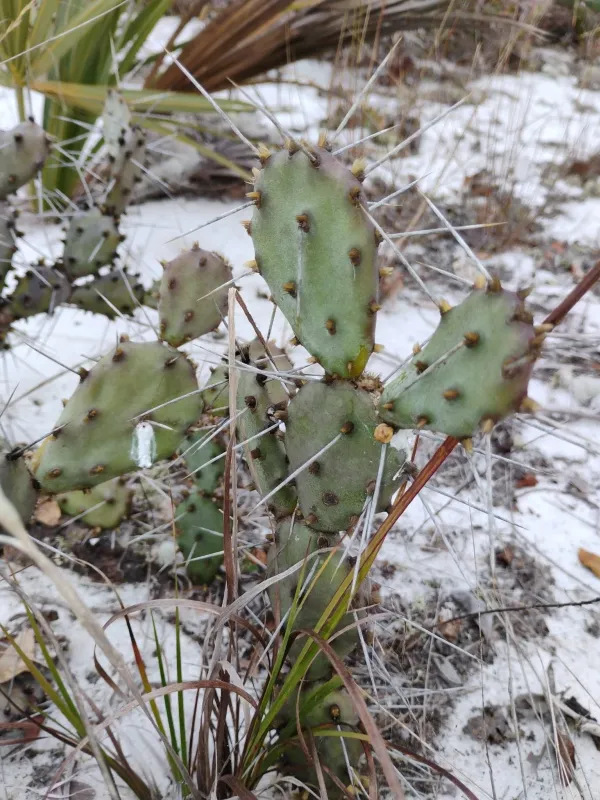
Description
Growing requirements
The Southern prickly pear (Opuntia austrina) is a perennial succulent belonging to the Cactaceae family. It is native to the coastal regions of Florida, where it naturally thrives in sunny, sandy habitats and dune environments.
This species requires high levels of direct sunlight to maintain its structural integrity and health. Inadequate light exposure often leads to etiolation, making the cactus pads appear thin and physically unstable.
Regarding soil requirements, Opuntia austrina demands an extremely well-draining substrate. Gardeners should prioritize inorganic mixes consisting of sand, pumice, and gravel to prevent any potential waterlogging issues.
Climate adaptability is a defining feature of this cactus, which is highly resistant to heat and prolonged drought. However, it is sensitive to severe, long-lasting frosts and should be protected during winter in cooler zones.
Proper cultivation practices focus on allowing the soil to dry out completely between waterings. Maintaining airflow around the base of the plant is also essential for preventing moisture-related stress and root decay.
Main diseases and pests
Root rot is the most common and dangerous condition affecting this plant. It is primarily triggered by overwatering or the use of heavy, moisture-retentive soils that do not allow the roots to breathe adequately.
Mealybugs are the most frequent insect pests encountered in Opuntia cultivation. They tend to hide in the joints between segments, making them difficult to detect until they have formed significant, visible colonies.
Scale insects can also pose a threat by attaching themselves to the cactus surface. These pests sap the plant's vitality and create entry points for secondary bacterial or fungal infections that can be fatal if untreated.
To manage these threats effectively, periodic inspections are necessary. Any infested pads should be treated with appropriate horticultural oils or systemic insecticides to stop the spread of pests across the collection.
Good sanitation practices, such as removing debris from around the plant and ensuring adequate ventilation, play a critical role in preventing the onset of various fungal pathogens that thrive in damp settings.