
Harrisia divaricata
Harrisia divaricata
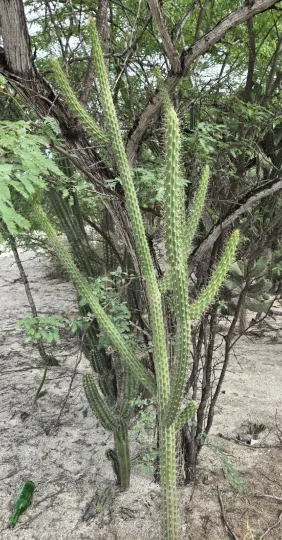
Description
Sowing dates
Cultivation of Harrisia divaricata primarily involves propagation through seeds sown in a well-draining, sandy substrate rich in mineral components to ensure success.
Seeds should be planted in the spring months to leverage increasing daylight, which provides the necessary energy for rapid germination and root development.
For vegetative propagation, healthy stem segments are used; these must be allowed to callus for several days before planting to prevent rot in the moist soil.
The optimal temperature range for the germination of seeds and root initiation of cuttings is between 22 and 25 degrees Celsius, kept consistent throughout the process.
Providing adequate air circulation during the early stages of plant growth is vital to support robust development and prevent the stagnation of young seedlings.
Growing requirements
Harrisia divaricata is a member of the Cactaceae family, native to the arid and rocky environments of the Caribbean islands, particularly Hispaniola.
The crop requires highly porous, calcareous soils to thrive, as excessive soil moisture is the primary cause of root degradation and subsequent plant death.
Exposure to full, direct sunlight is critical; insufficient light leads to etiolation, where the plant grows weak, spindly, and loses its structural integrity.
Temperature management is essential as the plant is not frost-tolerant, necessitating a climate that remains consistently warm throughout the year.
Irrigation must be carefully monitored, applying water only when the growing medium has fully dried out to mimic the natural hydration cycles of its native habitat.
Yield
The economic value of Harrisia divaricata lies in its edible fruit, which serves as a seasonal food source and possesses a distinct, mildly sweet flavor profile.
Maximum yield is achieved through a balanced nutritional program, focusing on phosphorus and potassium to enhance flower production and fruit set.
Fruits are typically bright red or yellow with a succulent pulp, making them attractive for local markets and culinary applications in tropical regions.
Beyond fruit production, the species is highly valued in xeriscaping, where its architectural form adds significant aesthetic appeal to dry garden designs.
Pruning excess or damaged stems helps the plant concentrate its metabolic energy on fruit development, thereby improving the overall quality and size of the harvest.
Main diseases and pests
The primary agricultural threat to this cactus is root rot, frequently caused by improper watering techniques or heavy, water-retaining substrate mixtures.
Pest management focuses on controlling mealybugs and spider mites, which congregate on the succulent stems and can severely weaken the plant if left unchecked.
Fungal infections, often characterized by dark spotting on the epidermis, can spread rapidly in humid, poorly ventilated greenhouse environments.
Maintaining a dry environment and ensuring proper plant spacing are effective cultural practices to reduce the incidence of disease and pest outbreaks.
Application of systematic insecticides and fungicides should only be considered when cultural controls prove insufficient, always following safety protocols.
Harvesting
Harvesting takes place when the fruit reaches full maturity, identifiable by a vibrant color shift and a slightly softer texture compared to the immature green stage.
Care must be taken during the harvest process as the fruit often bears small, sharp spines that can cause injury if not handled with protective equipment.
Post-harvest shelf life is relatively short, requiring immediate movement of the product to consumption channels or rapid processing to maintain high quality.
Fruits should be packed carefully to avoid bruising the delicate skin, as mechanical damage quickly leads to spoilage and a reduction in market value.
Optimal storage involves low-temperature and low-humidity conditions, which slightly extends the window for fresh market availability without compromising flavor.