
Gymnocalycium mesopotamicum
Gymnocalycium mesopotamicum
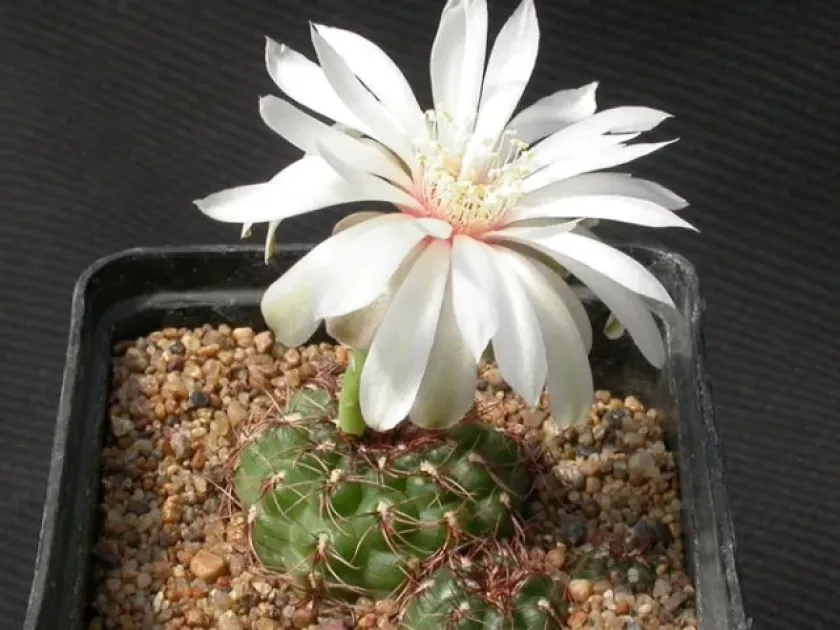
Description
Sowing dates
Sowing seeds of Gymnocalycium mesopotamicum is best performed during early spring to leverage the increasing daylight hours. The ideal temperature for germination ranges between 22 and 25 degrees Celsius.
A sterilized, slightly acidic substrate is essential for seed germination. A mixture of fine sand and peat provides the necessary drainage while maintaining adequate moisture levels for the seeds.
Seeds should be pressed gently into the substrate without being covered, as light is a critical factor for the emergence of young seedlings. Covering the container with glass or film is necessary to maintain humidity.
Daily ventilation of the container is mandatory to prevent fungal growth and damping-off. Gradually acclimatizing the seedlings to ambient humidity once they start to grow is crucial for their survival.
Pricking out the seedlings should be deferred until they develop enough strength to withstand transplantation. This practice reduces the risk of root damage in the early developmental stages.
Growing requirements
Gymnocalycium mesopotamicum is a member of the Cactaceae family, natively distributed in the Mesopotamian region of South America. It is a highly valued species among collectors for its distinct, flattened body.
This species requires bright, filtered light to maintain its compact growth form. While it tolerates some sun, excessive direct exposure during the summer months should be avoided to prevent burning.
The soil must be highly porous and inorganic-heavy to mimic the natural rocky environment. A combination of leaf mold, pumice, and coarse sand ensures proper aeration and prevents root suffocation.
Watering should be conservative, strictly allowing the substrate to dry out entirely between waterings. During winter, the plant enters dormancy, and watering should be suspended almost completely.
Proper airflow around the plant is vital to mimic the natural wind conditions of its habitat. This prevents the accumulation of humidity that can cause surface pathogens to thrive on the stem.
Main diseases and pests
Spider mites are the most common pests, particularly when indoor humidity is kept too low. They feed on the epidermis, often leaving tiny white or reddish dots that mar the surface of the cactus.
Mealybugs, both aerial and root-bound types, represent a constant threat. Regular inspections of the base of the plant and the root system are necessary to catch early infestations.
Root rot is the most frequent disease, usually triggered by poor drainage or overwatering. Once rot reaches the core of the plant, recovery is often difficult or impossible.
The use of systemic insecticides is recommended for managing pest outbreaks, while fungicides are reserved for specific fungal infections that manifest as dark spots on the skin.
Prevention remains the best strategy; keeping the plant in a clean environment and ensuring optimal drainage prevents the majority of physiological and pathological issues.