
Gymnocalycium horstii
Gymnocalycium horstii
Description
Growing requirements
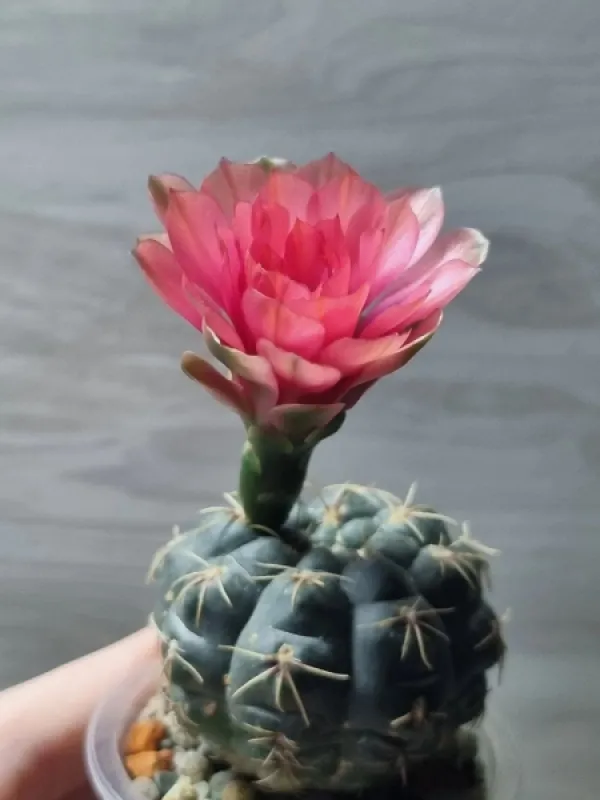
Gymnocalycium horstii is a distinct species of the Cactaceae family, native to the Rio Grande do Sul region in Brazil. It is highly valued in horticulture for its symmetrical shape and attractive, pale pink to white flowers.
The plant exhibits a globose stem which may become slightly columnar with age. Its ribs are well-defined and feature small, needle-like spines that typically lie flat against the stem, making the plant pleasant to handle.
Successful cultivation requires a highly porous, inorganic substrate mix. A blend of crushed rock, coarse sand, and perlite ensures excellent drainage, which is crucial for preventing waterlogging and root rot in this species.
The plant thrives in bright, filtered light. While it appreciates morning sun, intense afternoon exposure can cause the stem to yellow or burn. Maintaining an ambient temperature of 20°C to 30°C during the growing season is ideal.
During winter dormancy, the plant should be kept completely dry in a cool environment (around 10°C). This cycle is essential for initiating flower bud development in the early spring, ensuring a successful blooming season.
Main diseases and pests
Fungal pathogens are the most significant threat to Gymnocalycium horstii. Overwatering during periods of low light or low temperatures quickly leads to necrosis and root decay, which are often irreversible if detected late.
Pests such as mealybugs often hide in the crevices between the ribs of the cactus. Their presence can be identified by white, cotton-like masses, which severely weaken the host plant if not treated immediately.
Spider mites are another common challenge, especially in environments with poor air circulation. They cause microscopic damage to the epidermis, which can lead to unsightly scarring and reduced vitality of the plant.
Effective management includes regular monitoring of the crown and root neck. Utilizing systemic insecticides during the growing season provides a prophylactic shield against most sap-sucking insects that target cacti.
Cultural practices such as bottom-watering or applying water directly to the soil surface help keep the body of the cactus dry. Proper hygiene, such as using sterilized soil and pots, remains the best defense against soil-borne diseases.