
Gymnocalycium chacoense
Gymnocalycium chacoense
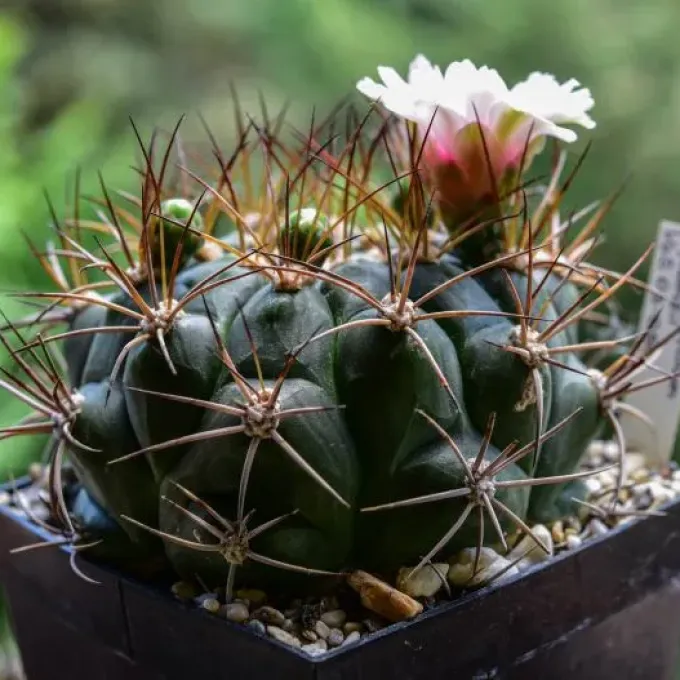
Description
Sowing dates
Sowing Gymnocalycium chacoense seeds is best performed during the spring months, allowing the seedlings to benefit from increasing daylight hours.
The substrate for sowing must be sterile and mineral-based, typically a mix of fine sand and perlite to ensure optimal drainage for the delicate roots.
Containers should be kept covered with glass or clear plastic to maintain a constant humidity level and a temperature range of 22–25 degrees Celsius.
Consistent light is crucial, though seedlings must be protected from direct, harsh sunlight which can easily dehydrate and kill young specimens.
Pricking out the young cacti should be done once they reach a size that allows for safe handling, ensuring they are transplanted into individual pots.
Growing requirements
Gymnocalycium chacoense belongs to the Cactaceae family and is native to the Chaco region, characterized by specific ecological conditions and seasonal rainfall.
The plant requires bright, filtered light to maintain its compact shape and healthy green epidermis, avoiding extreme direct sun exposure during noon.
The growing medium must be slightly acidic and porous, providing sufficient aeration to support the root system and preventing water from standing around the base.
Irrigation should be strictly controlled, allowing the soil to dry out completely between waterings to mimic the natural cycles of its native environment.
A dormant period during winter is essential for the cactus, requiring cool temperatures and minimal moisture to encourage flowering in the following season.
Main diseases and pests
Spider mites are the most common pests, often appearing when the ambient air becomes too dry, causing scarring and surface damage to the cactus body.
Root mealybugs can pose a significant threat by feeding on the root system, which often leads to poor growth and general decline of the entire plant.
Fungal infections, such as stem rot, are primarily caused by overwatering or poor ventilation, which encourages pathogens to thrive in the damp soil.
Proactive care, including the use of high-quality fungicide treatments and keeping the growing area clean, is vital for the longevity of the plant.
Regular inspections are recommended to catch infestations or infections early, ensuring that timely interventions can save the specimen from severe damage.