
Gymnocalycium bayrianum
Gymnocalycium bayrianum
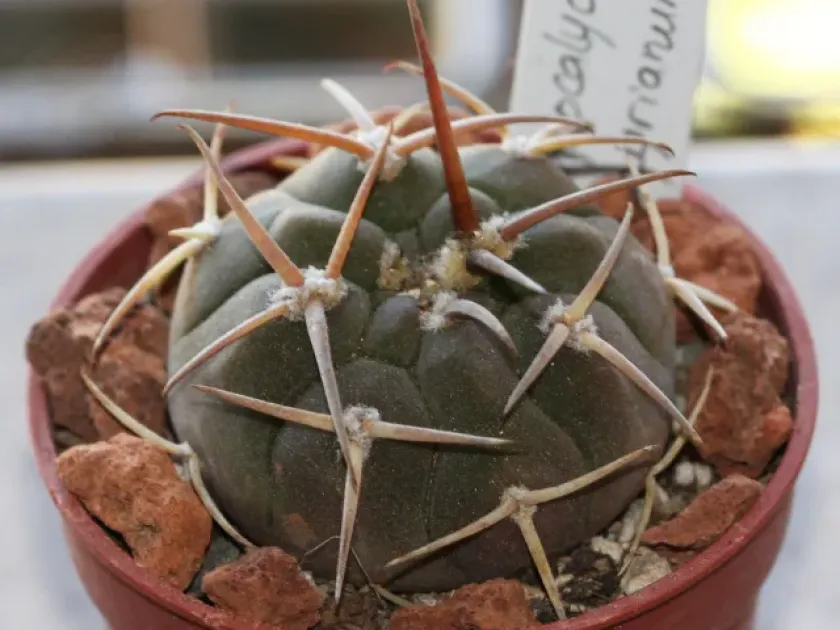
Description
Growing requirements
Gymnocalycium bayrianum is a distinct species of the Cactaceae family, native to the Salta province of Argentina. It typically grows on rocky slopes, displaying a unique spherical shape that makes it a prized specimen among professional growers and enthusiasts.
The plant features a flattened, globe-like stem with prominent ribs. Its coloration varies from olive green to brownish, allowing it to blend into its rugged natural habitat. The spines are typically short, curved, and pressed against the stem, providing a subtle defense mechanism.
Cultivation requires a highly porous and inorganic soil mix. A suitable substrate should consist of coarse sand, crushed gravel, and a minimal amount of organic matter to mimic its natural environment. Efficient drainage is mandatory to prevent root rot in this species.
Regarding climatic requirements, this cactus thrives in bright, filtered light. While it loves warmth during the growing season, it must be kept in a dry and cool state during the winter months (around 10°C) to ensure a proper dormancy period and stimulate future flowering.
Watering should be performed carefully, ensuring the substrate dries out completely between waterings. During the summer, moderate water is sufficient, but it is crucial to keep the crown dry to avoid fungal infections or disfigurement of the skin.
Main diseases and pests
The most common threats to Gymnocalycium bayrianum involve moisture-related issues, primarily root and stem rot caused by overwatering. A lack of proper ventilation can exacerbate these conditions, leading to rapid tissue decay.
Pests such as spider mites are a major concern, especially in dry and hot greenhouse environments. These pests tend to congregate in the crevices between the ribs, making them difficult to detect until significant damage has occurred to the plant's surface.
Mealybugs are another persistent threat. They often colonize the roots or hidden areas of the cactus, weakening the plant by draining its sap. Periodic inspection of the root system during repotting is essential for early detection of these pests.
Fungal pathogens like Fusarium can easily take hold if the plant is wounded or stressed. Preventive hygiene, such as using sterilized potting mixes and cleaning equipment, is the most effective way to keep the culture healthy throughout its long lifespan.
To ensure healthy growth and minimize risks, implement these practices:
- maintain high drainage in containers;
- use systemic pesticides if an infestation occurs;
- ensure adequate air circulation around the plants;
- avoid using cold water for irrigation.