
Gymnocalycium amerhauseri
Gymnocalycium amerhauseri
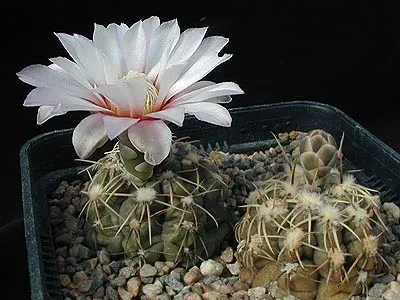
Description
Sowing dates
Sowing Gymnocalycium amerhauseri seeds is best performed during spring when ambient temperatures consistently reach between +20°C and +25°C. A sterile, well-draining substrate composed of fine sand and peat is essential.
Seeds are sown on the surface of the moist medium. They should not be buried deeply but can be covered with a very thin layer of fine sand to maintain stability. The container must be kept covered to create a humid microclimate.
Bright, indirect light is required for successful germination. Intense direct sunlight must be avoided during this stage to prevent the seedlings from dehydrating or scorching in the humid environment.
Once seedlings grow to the size of a pea, they are ready to be pricked out into individual pots. This stage requires extreme care to avoid damaging the delicate root structure.
Young cacti should be gradually transitioned to the cultural conditions of adult plants, slowly reducing humidity and increasing light exposure over several weeks.
Growing requirements
Gymnocalycium amerhauseri is a member of the Cactaceae family, native to the Cordoba province in Argentina. It thrives in high-altitude rocky terrains with fluctuating environmental conditions.
The culture requires a porous, aerated soil mix. A mixture of loamy soil, leaf mold, and a significant amount of coarse mineral grit or volcanic rock is ideal for maintaining the necessary drainage.
Optimal growth occurs in bright locations with filtered light. While the plant prefers high intensity, direct midday sun can cause epidermis bleaching, so light shading is often recommended during summer months.
Temperature fluctuations between day and night mimic its natural habitat and are beneficial for healthy growth. During the winter dormancy, the plant should be kept in a cool, dry place around +10°C.
Watering must follow a "soak and dry" cycle. The soil must be completely dry before the next watering session. Excessive moisture, especially during low temperatures, is the most common cause of root loss.
Main diseases and pests
Root rot is the primary threat to the health of Gymnocalycium amerhauseri, usually caused by overwatering or poor drainage. Once established, the rot spreads quickly through the stem, making recovery difficult.
Pests such as spider mites and root mealybugs can infest the plant, particularly if the environment is too dry and lacking air circulation. These pests drain the plant's vitality and leave it vulnerable to pathogens.
Management involves periodic inspection of the roots and the stem surface. If an infestation is detected, systemic insecticides or specific acaricides should be applied to eliminate the threat.
Good hygiene in the growing area, combined with proper ventilation, is the best preventive measure against most fungal and parasitic threats to this cactus species.
- Use of sterilized soil components.
- Regular inspection of the root neck.
- Proper drying periods between waterings.
- Isolation of new plants to prevent pest spread.