
Echinopsis oxygona
Echinopsis oxygona
Description
Growing requirements
Echinopsis oxygona is a well-known species belonging to the Cactaceae family, native to the diverse landscapes of Argentina, Uruguay, and Southern Brazil. It has evolved to thrive in arid and semi-arid environments, favoring rocky terrains and well-drained slopes.
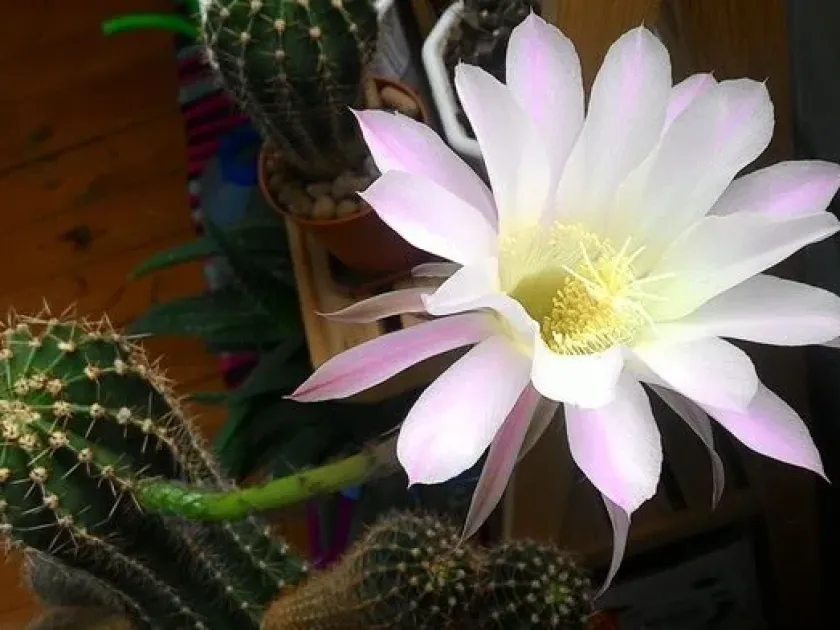
Botanically, this species is defined by its globose or short-cylindrical stem, which is deeply ribbed. The rib margins are adorned with small, clustered spines. The plant is highly valued for its large, fragrant, white to light pink flowers that bloom primarily at night.
For successful cultivation, the plant requires high light intensity, ideally placed in a south-facing window or a greenhouse with plenty of direct sunlight. Providing adequate UV exposure is essential to maintain the structural integrity and health of the cactus epidermis.
The substrate must mimic its natural habitat, emphasizing drainage. A mixture composed of mineral components such as perlite, pumice, and coarse sand, mixed with a small proportion of organic potting soil, is the gold standard for maintaining a healthy root environment.
Watering requirements follow a strict seasonal pattern. During the growth phase, water sparingly once the soil is completely dry. During the winter dormancy phase, watering should be reduced to an absolute minimum to prevent freezing damage and root rot.
Main diseases and pests
The most critical threat to Echinopsis oxygona is water-logging, which inevitably leads to fungal rot at the root collar. Ensuring the substrate does not stay damp for extended periods is the primary defense against these fatal infections.
Pest management should focus on early detection of common succulent invaders such as spider mites, mealybugs, and scale insects. Regular inspection of the ribs and areoles is advised, with intervention using appropriate organic or chemical pesticides as soon as signs appear.