
Echinopsis hybrids
Echinopsis hybrids
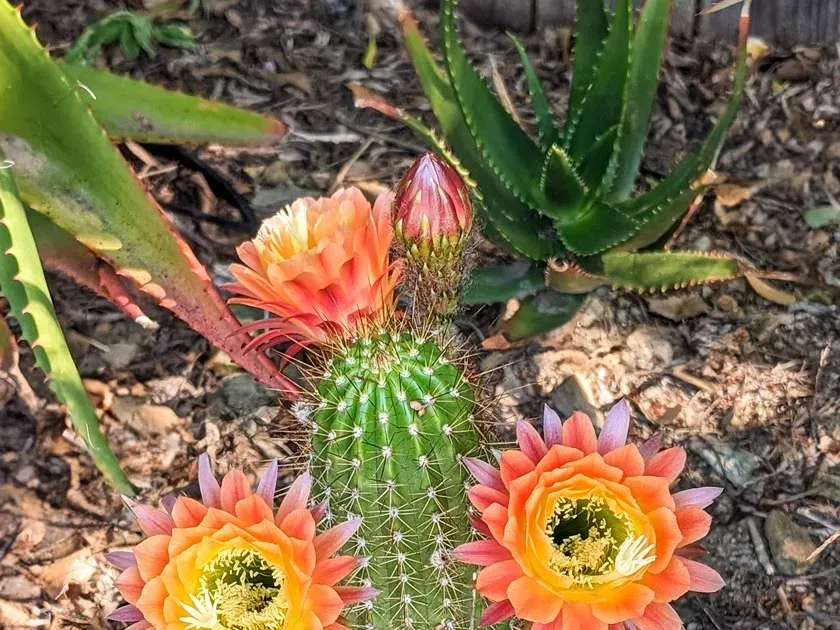
Description
Growing requirements
Echinopsis hybrids belong to the Cactaceae family and are specifically bred for their spectacular, large, and colorful flowers. Unlike species plants, these hybrids exhibit a wide genetic diversity, offering blooms in shades ranging from vibrant pinks and oranges to deep purples and bi-colors.
Proper soil composition is vital for the health of these cacti. A well-draining, mineral-rich substrate is essential to mimic their natural arid environment. A standard mix includes coarse sand, pumice, and grit, mixed with a small proportion of organic potting soil to ensure aeration.
These plants thrive in full sun but require careful acclimatization to avoid sunscald during peak summer intensity. Providing bright, indirect or direct filtered light ensures robust growth and strengthens the epidermis, which is crucial for overall plant vitality and potential for future flowering.
Temperature management is a key aspect of their agronomy. They prefer warm, ventilated conditions during the growing season, while a distinct cold period in winter (between 5°C and 10°C) is mandatory to initiate the hormonal processes required for flower bud development in the spring.
Commercially, these hybrids are highly valued for their ease of propagation and visual appeal. They are frequently utilized in ornamental nursery production and are staple specimens for private botanical collections across the globe due to their relatively undemanding nature when conditions are met.
Main diseases and pests
The primary threat to Echinopsis hybrids is root rot caused by stagnant moisture. Excess water in the substrate prevents gas exchange in the roots, facilitating the proliferation of soil-borne fungi that quickly destroy the plant's vascular system.
Mealybugs remain the most persistent pest, often congregating in the deep recesses between ribs and around the areoles. Their presence is marked by white, cotton-like masses, and they can significantly stunt growth if infestations are not addressed promptly.
Spider mites are another major concern, especially in dry, stagnant air. These microscopic pests feed on the plant's sap, resulting in discolored, corky patches on the stem surface that permanently damage the aesthetic appearance of the succulent.
Scale insects can also infest the stems, appearing as hard, brown bumps. They are difficult to treat due to their protective shells, requiring systematic insecticide treatments or physical removal to prevent them from sapping the plant's resources.
Maintaining good air circulation and strictly avoiding overhead watering during cool weather helps prevent many of these biological threats. Routine monitoring of the stem base and areoles is the best strategy for early detection and mitigation of potential pest outbreaks.