
Echinopsis hahniana
Echinopsis hahniana
Description
Sowing dates
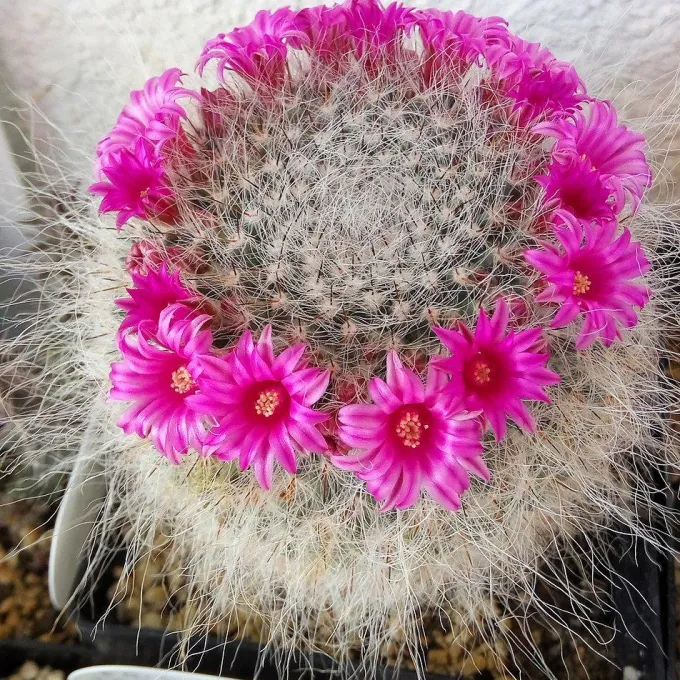
Echinopsis hahniana is a popular cactus species within the Cactaceae family, valued for its dense, woolly appearance.
Propagation is primarily achieved through seeds, which should be sown in a well-draining, mineral-rich substrate during early spring.
The seeds require consistent temperatures between 20°C and 25°C to break dormancy and ensure high germination rates.
Seedlings need a humid environment for the first few months, maintained under a protective covering to prevent dehydration.
Gradual acclimatization to drier air is necessary to avoid shock and ensure robust growth of the young cactus body.
Growing requirements
Native to South American high-altitude regions, this plant thrives in conditions that mimic its natural mountainous habitat.
The plant requires high light intensity; placing it in full sun is crucial for developing the dense, white hair characteristic of the species.
Soil composition must be inorganic-based, typically a mix of pumice, perlite, and coarse sand to facilitate rapid drainage.
Watering frequency should strictly follow the cycle of the season, with deep watering during summer and almost none in winter.
A dormant period with low temperatures, between 8°C and 12°C, is essential for promoting healthy flower bud development.
Main diseases and pests
Root rot is the most significant threat to the survival of the plant, often resulting from poorly draining soil or excessive winter irrigation.
Mealybugs are common pests that hide within the white hairs of the cactus, making them difficult to detect at an early stage.
Spider mites can appear in hot, stagnant air environments, causing unsightly scarring on the surface of the cactus skin.
Regular monitoring for pests and applying targeted biological or chemical treatments can mitigate these risks effectively.
Good ventilation is the most important cultural practice to maintain plant health and prevent the onset of fungal infections.