
Echinopsis chrysantha
Echinopsis chrysantha
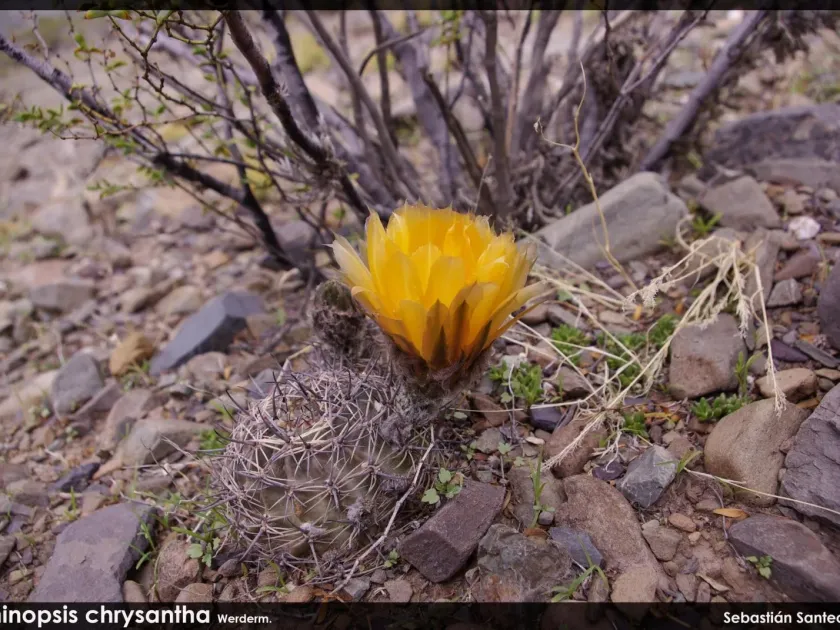
Description
Sowing dates
Propagation of Echinopsis chrysantha via seeds requires a consistent temperature range of 20–25 degrees Celsius to achieve optimal germination.
Spring is the ideal season for sowing, as the increasing day length and intensity of natural light significantly boost the growth of young seedlings.
Use a highly porous, sandy substrate with minimal organic matter to prevent the damping-off disease common in young cacti seedlings.
Once the seedlings develop their first characteristic spines, they require systematic transplanting to allow sufficient space for root development.
Gradual acclimatization to direct sunlight is essential for preventing sunburn in young plants that have been raised in shaded conditions.
Growing requirements
Echinopsis chrysantha is a member of the Cactaceae family, native to the high-altitude, rocky regions of Argentina, requiring specific mountain-like conditions.
This species demands intense sunlight exposure, which is crucial for maintaining a compact growth habit and stimulating the production of its signature yellow blooms.
The potting medium must be strictly mineral-based, typically a mixture of coarse sand, perlite, and volcanic rock to ensure rapid drainage.
Watering should be performed only when the soil is completely dry, and must be strictly suspended during the winter dormancy period to prevent root rot.
Temperature fluctuations between day and night are beneficial, as they mimic the natural alpine environment of the species and support physiological health.
Main diseases and pests
Root rot caused by stagnant moisture is the most significant threat to the survival of the plant, often resulting from improper watering schedules.
Spider mites are common pests that thrive in dry indoor environments and can quickly damage the skin of the cactus if left untreated.
Mealybugs are another persistent threat, often settling within the deep areoles where they are protected from topical treatments.
Maintaining good air circulation is a simple yet effective method for reducing the risk of fungal outbreaks in a cactus collection.
If an infestation occurs, specialized systemic pesticides should be used according to the manufacturer's instructions to eliminate the pests safely.